Showing posts with label Karen. Show all posts

Monday, September 2, 2019

September 2019: Obasan by Joy Kogawa

Details - Karen's house, 7:30 p.m. September 5, 2019

Discussion Questions: 

1.  Did you enjoy the book, why or why not?
2.  How aware were you of this part of Canadian history prior to reading this book?
3.  How does time funtion in Obasan? How does it affect your understanding of the story?
4.  What effect does Old Man Gower have on Naomi?
5.  Chicks/chickens come up repeatedly throughout the novel, is there significance?
6.  How does Naomi feel about her mother? How are we meant to feel about her? Does the ending of the novel change either of those feelings?
7.  This novel has a lack of strong male characters?  Why is that?  How would the story be different if characters like Naomi's father and Uncle Same were as important to the story as Aunt Emily or Obasan?
8.  Would you recommend this book, why or why not?

Menu-there were a few food items mentioned in the book,

- miso soup
- rice bowls
- rice osushis
- pound cake

otherwise feel free to find a Japanese recipe you'd like to try.

Tuesday, September 4, 2018

June 2018: EMMA by Jane Austen

Image result for emma jane austenDiscussion Questions:

Did you enjoy this book?  Why or why not?
1. “Emma Woodhouse, handsome, clever, and rich, with a comfortable home and happy disposition, seemed to unite some of the best blessings of existence; and had lived nearly twenty-one years in the world with very little to distress or vex her.” It has been said that great novelists introduce the main themes of a book in the first sentence. What themes are suggested in the first sentence of Emma? What does it tell us about Emma Woodhouse? Discuss the use of the word “seemed,” which implies that all is not as it appears. Are the rich without cares? Is Emma as happy and clever as the first sentence states? Examine Austen’s choice of other words and phrases in this sentence.
2. Mr. Woodhouse says, “Emma never thinks of herself if she can do good to others.” Is this a positive or negative attribute? What is significant in Austen’s word choice here?
3. Describe Mr. Woodhouse. What are the reasons for his fears? Is he a hypochondriac or is he in ill health? What kind of a daughter is Emma?
4. “Altogether, she was quite convinced of Harriet Smith’s being exactly the young friend she wanted--exactly the something which her home required.” Discuss Emma’s choice of friends. Why does she befriend Harriet? Does Harriet benefit from Emma’s friendship? Why isn’t Harriet a good companion for Emma? Why doesn’t Emma befriend Jane Fairfax?
5. Emma discourages Harriet from accepting Mr. Martin’s proposal on the basis of his not being a “real gentleman.” Is this true? Who measures up to being a real gentleman?
6. What is the importance of Mr. Knightley asking Harriet Smith to dance? How does this dance change the relationship between Mr. Knightley and Emma?
7. Why does it take Frank Churchill so long to pay his respects to Mrs. Weston? How and why does Emma’s initial opinion of him change? What are the sources of Mr. Knightley’s dislike of Frank Churchill?.
8. What revelations or lessons does Emma experience that contribute to her growing selfawareness? To “thoroughly understand, her own heart” becomes Emma’s “first endeavor.” How has she changed since the beginning of the novel? Compare and contrast her views on marriage at various points in the novel with attitudes of the time.
9. Do Mr. Knightley’s feelings for Emma change over the course of the story, and, if so, how do they change?
10. Marriage is a central device in Emma, but not all of the marriages are necessarily good. Discuss the matches between Mr. Weston and Miss Taylor, Mr. Elton and Mrs. Elton, Emma and Mr. Knightley, Harriet and Mr. Martin, and Jane Fairfax and Frank Churchill. What traits do the characters in each couple possess that make them suited or unsuited for each other? about the options of women of?
 11. According to her nephew James Edward Austen-Leigh, Jane Austen said when she started to write Emma, “I am going to take a heroine whom no one but myself will much like.” Do you like Emma? Is it necessary to like the heroine to appreciate the character or the novel?
12. It is often said that great literature bears rereading. How is that particularly true with Emma?
13.  Would you recommend this book to others?  Why or why not?

Menu- British Tea

Finger sandwiches  (cucumber, egg, smoked salmon)
Strawberries & cream
Scones
Toast with orange marmalade
Shortbread cookies
Trifle

Tuesday, December 5, 2017

December 2017: A Homemade Life by Molly Wizenberg

3090282
Meeting Details
Monday, December 11, 2017
7:30 p.m.
Karen's house

Discussion Questions
1.  Did you enjoy the book?
2.  For those of you without recipe pictures in the book, did it affect your enjoyment of the book as a cookbook?
3.  Would you recommend this book to others?  Why or why not?


Menu- 
please feel free to choose recipes from the book or the blog


Starter-

Soup -

Salad -

Main -

Side -

Dessert -

Tuesday, December 6, 2016

December 2016 - DATE NIGHT IN - Ashley Rodriguez


Image result
Meeting Details: 

Karen's house
Thursday , December 15th, 2015  7:30 p.m.

* Check email for address and phone number.

Discussion Questions                                                                                                                                          

1.  Did you like the book?  Which was your favorite story?

2.  Have you  made any recipes, and which would be your favorite?

3.  Do you and your spouse have a regularly scheduled date night in?  How long have you been doing this?

4.  Has your style of cooking changed through the years?

5.  In "Feasting on Spring" while the author is making the homemade mayonnaise, she writes "I wonder if he thought I was crazy".  Do you have a comparable "making by hand is crazy"recipe?

6.  "His Birthday" - "I wanted to spend hours constructing a perfectly balanced cake with many components that each, in there own way say "you are loved".  Are there special treats/traditions that occur for your spouse's  birthday in your house?

7.  In "A Soup for Summer" the author says she is not a big propenent of habits, ritual, consistency.  Is that something that resonates with you?

8.  "A Taste of Home" - what does that bring to mind for you?

8.  In "Wooed by Fried Chicken" the author says that "whatever my mood is when I begin cooking, I always find that at the end I am more relaxed feeling, grateful and happy?  Do you enjoy cooking, is it a chore or something you truly enjoy?

9.  " A Winter BBQ" - what would your words to yourself on your wedding day sound like?

10.  Would your recommend this book to others?


MENU- Please post which recipe you will be bringing!


I will provide the Pineapple Rosarita, Thyme Lemonade and Chocolat Chaud


Tuesday, February 2, 2016

February 2016: Unbroken- Couple's Meeting


unbroken-pb


1. Did you enjoy this book, why or why not?

2. Readers and critics alike have described Unbroken as gripping, almost impossible to put down. Was that your experience as well? How do you account for the page-turning quality given the grim subject material? Also, would your reading experience have been different if you didn't know that Zamperini survived? (Or didn't you know the outcome?)

3. Laura Hillenbrand gives us a moving story, one that brings to life the suffering and courage of not just one man but thousands, whose stories are untold. What is it about Hillenbrand's writing that saves her book from becoming mired in bathos and melodrama?

4. What do you admire most about Zamperini? What enables him to survive the plane crash and POW ordeal? Does he possess special strengths—personal or physical? Did his training in track, for instance, make a difference in his resilience?

5. How do the POW captives help one another survive? How are they able to communicate with one another? What devices do Zamperini and others use not only to survive but to maintain sanity?

6. What do you find most horrifying about Zamperini's captivity?

7. Does this book make you wonder at mankind's capacity for cruelty? What accounts for it—especially on the part of the Japanese, a highly cultured and civilized society? (The same question, of course, has been applied to the Nazis.)

8. Hillenbrand devotes time to the difficulty of veterans' re-entering life after the war. She says, "there was no one right way to peace; each man had to find his own path." What is Zamperini's path? 
How does his conversion under Billy Graham help him? What role does his wife, Cynthia, play?

9. Follow-up to Question 7: Why, after World War II, did the medical profession fail to acknowledge Post Traumatic Stress Disorder? After all, this was the mid-20th century, and psychiatry was a fairly established discipline. Plus, the horrors of World War I were only one generation behind. What took so long?

10. Unbroken is a classic inspirational story, but it lies somewhat on the surface, offering little in the way of psychological depth. Do you wish there were more instrospection in Zamperini's account? Or do you feel this story is rich enough as it is?

11.  Would you recommend this book to others?

Menu
Bread- Bruschetta
Salad- Garden /Caesar
Soup- Italian Wedding /Zuppa Toscana/Tuscan Bean Soup
Main-Pizza/Pasta with noodles/Lasagna/Baked Penne with Roasted Vegetables/
Dessert-Tiramisu/Italian Ice/Cannoli/Biscotti

Thursday, April 30, 2015

May 2015 - Wonder by R.J. Palacio


PictureMeeting Details:  Thursday May 7, 7:30 p.m. at Karen's house
Discussion Questions
1.  Did you enjoy the book?  Why or why not?
2.  The line "Don't judge a boy by his face" appears on the back cover of the book, did this line give away anything about the story you were about to read?
3.  Throughout the book, Auggie describes the way that many people react to seeing his face for the first time: by immediately looking away.  Have you ever been in a situation where you have responded to seeing someone different?  Think also of the author's writing about being inspired to write this book after an experience at the ice cream parlour?  Having now read Wonder, how do you feel about this now?
4. Auggie's face is not fully described until quite far on in the story.  How close was the description to your own mental picture of Auggie?  Did you have a picture of his face in your mind while reading the book?  Did the description alter that picture?
5.  What are the characteristics of a good friend?  Which of Auggie's friends demonstrate these qualities?  How does Auggie help his friends see him as an ordinary kid?  How does Auggie's ability to be comfortable in his own skin make it easier for his friends and family to relate to him?
6.  Discuss how Auggies's attendance at Beecher Prep creates issues for students, parents, teachers and the principal.  How are the challenges overcome?  What role does Auggie play in either helping or hurting the situation.
7.  Quite often, kids that are different are bullied in some way? What is Auggie's response to the bullying?
8  How do Auggie and Via respond to the betrayal from their friends, how do they resolve their individual conflicts and cope with the pain of betrayal?
9.  What do you make of the statement that Mrs. Albans makes that Auggie is handicapped?
10.  Would you recommend this book?  Why or why not?

Menu- there were very few references to food in the book, but several times the scene is described in the lunch area of the school so I would suggest a cafeteria style lunch. Soup, salad, sandwiches, dessert.  Feel free to add to the list.


Monday, June 2, 2014

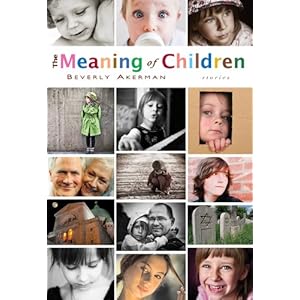
June 2014: The Meaning of Children- Bev Akerman


Meeting Details:
At Karen's House on Thursday, June 5th at 7:30; with discussion to begin as close to 8pm as we can manage.  :-)

Discussion Questions:

  1. Did you enjoy the book/stories? Why or why not?
  2. Which story was your favorite?  What did you like best about it?
  3. Which story was your least favorite?  Why?
  4. Do you think these stories accurately depict relatonships today between parents and children?
  5. How do you think these stories are linked together?  
  6. Akerman gives us three sections: Beginning. Middle. End.  What does she say that parenting is like in each section.  Do you agree?
  7. Is Akerman able to answer the title of the book “the meaning of children” throughout these stories?
     8. "Tumbalalaika"

  • This story is written about the adult world from a child's perspective.  Do you think the author got the child's perspective right?
  • How does Karen see her parents?  their relationship?
  • "Sort of like a parent," Karen observes (pg 19).  In what ways is the stick like a parent?
  • What does the closing image of the plastered over wall mean to Karen?

    9.  "Pour Un Instant"

  • Marcy struggles with feeling like she is hurtling towards puberty, ready or not.  In what ways is her experience normative for her day and age?  In what way(s) is her experience unique?
  • Describe Marcy's relationship with Akiva.  What are they seeking/finding in each other?
  • Marcy is overwhelmed with emotion at the end of the story.  What causes this?  What emotions is she experiencing?
     10. "Pie"

  • The narrator compares boys and pie making... how does she say they are alike? How are they different?
  • Why does she refuse to make rhubarb pie?
  • Do you have a similar experience with food - that is, a food that you can no longer eat because of it's association with a life event?
     11.  Would you recommend this book to others? Why or why not?


Menu - The Sweetness of Childhood

Rhubarb Pie- Tamara
Apple Cake - Melissa
Peach Cobbler
Cereal Squares - Shelagh
S'Mores Brownies - Tessa
Ice Cream - Erica

Wednesday, October 2, 2013

The Painted Girls - Discussion Highlights


We had the opportunity to skype with Cathy Marie Buchanan for about half an hour at the start of our meeting.  She provided us with information on how the idea for the book came about, and the  detailed research that she did to prepare for the writing of this book. This was the second time this book club had the opportunity to skype with Cathy, and it was neat to hear from an author on  what it takes for a book to be published

Overall the book was liked by us, there are some parts of it that are somewhat graphic and perhaps too detailed/explicit (which lead  most of us to conclude that this is a book we would  recommend with reservation).   The author does a good job of honestly depicting what really happened during the 1800's  to these three young sisters who had no real protection, no one to  stand up for them, guide them or provide for them. Most of the men in the story took advantage of the girls in some way, with the exception of the baker, a favorite of those reading.

These sisters sometimes made mistakes, but support each other the best they can under the difficult circumstances in which they live; it was felt that neither Marie or Antoinette would have been able to survive if they did not have each other.

We had an assortment of french cheese with crackers and pastry (Boursin is our new favorite cheese :), with Madeline's and eclairs for dessert!


Monday, September 2, 2013

September 2013: The Painted Girls by Cathy Marie Buchanan

 Meeting details:  we are meeting on Thursday evening, Spetember 5th at 7:30 
Discussion Questions: 
  1.  Did you enjoy this book?  Why or why not?
  2. “Tonight, roasted chicken in your belly,” Maman says, loosening her arms, stepping back from me. “And always, an angel in your heart.” Marie’s mother often reminds her that the spirit of Marie the First, her older sister who died in infancy, is with her. How is Marie affected by her namesake? Why, at the end of the book, does she tell the old man at the tavern her name is Marie the First?
  3. Is Marie deluding herself in believing her hatred of Émile is justified? Once she sees he cannot be guilty of the second murder, is it fair for her to destroy the alibi provided by the calendar? To what extent is she looking after her own best interests when she burns it?
  4. Sometimes I wonder, though, if for the very best ballet girls, the trickery is not a little bit real, if a girl born into squalor cannot find true grace in ballet. Marie thinks this while looking at her fellow ballerinas on the Opéra stage. Does Marie experience true grace while dancing? Without the ballet can Marie be fully content?
  5. Émile consistently mistreats Antoinette. He forces himself upon her and then tells her it’s her fault; he allows Pierre Gille to slap her, and then abandons her for him. Is Antoinette’s blind love for Émile realistic? Of all his wrongdoings, why is it a lie that finally makes her see the light?
  6. In what instances does Antoinette’s bold temperament hinder her? When does it serve her well?
  7. “Both are beasts. The physiognomies tell us…Those two murderers are marked.” Degas says this to Marie after Émile is declared guilty of a murder she knows he did not commit. Why does Degas feel it is fair to judge the boys’ characters based on the way they look? What are some other moments in the book when people are judged as “beasts” or based on appearance?
  8. “No social being is less protected than the young Parisian girl—by laws, regulations, and social customs.” —Le Figaro, 1880. Why did Buchanan choose this quotation as the book’s epigraph? How does it relate to the story? In what ways are the Van Goethem sisters unprotected?
  9. I want to put my face in my hands, to bawl, for me, for Antoinette, for all the women of Paris, for the burden of having what men desire, for the heaviness of knowing it is ours to give, that with our flesh we make our way in the world. Marie thinks this while waiting to see Antoinette at Saint-Lazare. Is she correct in such thinking? To what extent does the sentiment hold true today?
  10. What role does honesty play in this book? Do you support Antoinette’s decision to tell “one last lie” to Marie, the lie about Émile’s guilt? Does she go overboard with her refusal to tell even white lies by the end of the book? In what ways are Marie and Antoinette good sisters to each other? In what ways are they not? Would the power of sisterhood have prevailed had Antoinette not found out Émile was unfaithful to her? 
Menu: French Delights
The menu will be an assortment of french cheeses, and pastries.   I have taken the list from Cathy's website (I'm not sure how readily available they all are, there are some on this list I have never heard of!) Depending on the cheese,  bring along some crackers or bread.
Camembert
Brie - Melissa
cranberry Wensleydale - Chandra
Roquefort
Boursin- Sherrie
Pont l'Eveque
Chevre - Danielle
Tomme de savoie
Comte
Dessert
Madeleines-recipe can be found on www.cathymariebuchanan.com
(Tessa - I don't have a madeleine pan, but I'll try this in a different pan, just for fun)
Pastry- Amanda
Refreshments-Karen

Wednesday, October 10, 2012

October 2012: Death Comes to Pemberly by PD James


Meeting Details:
  we are meeting at Karen's house on Thursday, October 11 at 7:30PM

Menu- Appetizers and Desserts
Assorted Cheese tray - Sherrie
Meatball on Stick - Melissa
Bruschetta flatbread - Amanda
Mini Crab Cakes
Cold meats - Stephanie
Puff Pastry - Danielle
Chocolate Mousse - Tessa
If you have some other great ideas, feel free to share :)
Discussion Questions
1.Did you enjoy the book?  Why or why not?

2. What about the characters of Death Comes to Pemberley? Has James maintained their essential natures and personalities...or changed them in some way? How consistent are they with Austen's originals? Consider Elizabeth and Darcy, the Bingleys, the Wickhams, Colonel Fitzwilliam, and Lady Catherine de Bourgh.

3. Follow-up to Question 3: James provides greater access to Fitzwilliam Darcy's state of mind than Austen permitted her readers. What do you learn about Darcy that you didn't know before? Does your opinion of him change...or remain the same as it did after reading Pride and Prejudice? If you haven't read P & P, what conclusions do you reach regarding Darcy's character?

5. When the murder is first discovered, Wickham utters, "I killed him.... It's my fault." How did you interpret his confession? Were you ready to believe in his guilt?

6. Good crime writers like P.D. James embed clues early on in their stories. What seemingly inconsequential clues are dropped that later turn out to be decisive in solving the mystery. How cleverly does James bury her clues?

7. Mystery writers also like to throw in red-herrings. Are there any false clues in Death Comes to Pemberley that fooled you, leading you to expect a different outcome?

8. In what ways does P.D. James highlight class distinctions in this work? Why, for instance, does the Magistrate Selwyn Hardcastle not wish to waste his time at Pemberley? How are servants treated at Pemberley; compare that to how they're treated at Mrs. Hurst's in London?

9. Why does the colonel speak to Elizabeth rather than to Darcy about his desire to marry Georgiana?

10. Elizabeth watches Georgiana and Alveston interact and realizes the two are in love. She reflects on "that enchanting period of mutual discovery, expectation and hope. It was enchantment she had never known." Why does Elizabeth think this? Is she not in love with her husband?

11. Follow-up to Question 10: When Elizabeth gazes down at Wickham, who is sleeping with "his dark hair tumbled on the pillow, his shirt open to show the delicate line of the throat," she thinks he looks "like a young knight wounded in battle." Is Elizabeth a bit in love with Wickham? She wonders whether she would "have married him if he had been rich instead of penniless." This is the second time Elizabeth has questioned her motives for marrying Darcy: wondering if she had been attracted to Darcy primarily for his wealth and position. What do you think?

12. Why does Darcy never wish to speak of the incident in which Wickham had attempted to elope with Georgiana? Why does Georgiana wish the two of them would talk about it?

13. Darcy knows that this latest scandal will threaten the family reputation. Yet he seems almost relieved that, as a result, his cousin, Colonel Fitzwilliam, will not make an offer for Georgiana's hand. Why is he relieved? It would be a brilliant marriage for Georgiana; she would eventually become a countess.

14. An existential dread hangs over the characters at Pemberley even before the murder takes place. Elizabeth, especially, feels a deep unease, a "turmoil in her own mind." Looking from the vantage of historical hindsight, how might James be using the violent wind at the beginning of the novel as a symbol of something threatening the aristocracy?

15. How are women generally viewed in this society? How does Alveston's ideas challenge those views? Alveston mentions Mary Wollstonecraft. Who is she? You might do a little research on Wollstonecraft—a vital figure in the 18th century, whose ideas influenced future generations. (You also may be surprised to learn the identity of her daughter.)

16. Why is Lydia Wickham never questioned about what happened in the carriage between her husband and Captain Denny? Might the fact that she isn't questioned have anything to do with Questions 8 and 15?

17. Aside from ignoring Lydia, what other holes occur in the investigation—gaps that seem like missteps to modern readers steeped in police procedural novels and TV-serials? (Don't neglect the ironic quip regarding 18th-century science's inability to distinguish blood types.) What about the inquiry and ensuing trial—how does the justice system fail there? What safeguards, present today, seem to be missing in Wickham's court trial?

18. How does Darcy see his role as a great landowner? What responsibilities do the upper classes have in his society? As Darcy reflects back on his decision to marry to Elizabeth, does he believe it was a wise choice for a man in his position? How might his marriage have undermined his family's position?

19. When Darcy meets Wickham at the Gardiner's London house, what conflict does he hold with regards to proper social behavior vs. his own feelings toward Wickham? Why, in Darcy's mind, is social etiquette necessary? What was his mother's explanation for good manners? What role do manners play in modern society? Has today's culture dispensed with, or maintained, good manners?

20. What is Louisa Bidwell's chance for happiness? Is her fate a fair one? The Reverend Oliphant considers her "a highly intelligent" girl" who...
had been given a glimpse of a different and more exciting life, but undoubtedly the best had been done for her child and probably for her.
Do you agree? Why does Elizabeth, a few lines later, feel "a twinge of regret" when she considers Louisa's future as parlormaid at Highmarten?

21. What do you think the future holds for Wickham and Lydia?

23. Were you surprised by the revelations at the end of the mystery?

24. Is Death Comes to Pemberley a good mystery? Is it a good sequel to Jane Austen's Pride and Prejudice?

Tuesday, April 20, 2010

Hospitality Questionnaire- Karen

April 2010: Questionaire
1. How often do you have company in your home (per week/month/year)?

We have company at least once per week- a lot of them teenagers/young adults because of the ages of our children.

As far as grownup company it would be a couple of times per month.


2. What do you enjoy about hosting? What do you dislike?

I enjoy the sitting and chatting with people in my home. (I also love the fact that I am just 15 steps away from my bed at the end of the night and do not have to drive home first)
I dislike the self-imposed thought that everything needs to be spic and span! (although as I age I am relaxing my thoughts on the "crazy clean -company's coming")

3. Name 2 things that you do for company/before company arrives, that you rarely/never do otherwise.

Everything is completely cleaned up and in its place on my kitchen counters.- I'm having trouble thinking of a second one here!!


4. What is on your "last-minute check list" right before the door bell rings?

Check those counters
Make sure there are clean towels hanging in the bathroom

5.What is your favorite "event" to host? ( for example: coffee, a meal, evening, over-nightter, family/friends, outdoor/indoor, casual/formal... etc)

I also love summer entertaining. I also enjoy hosting big family dinners i.e. Christmas/Easter, although I have gotten much more relaxed with that as well- a sit down dinner for 25 plus is not as daunting after doing it few times round.

Monday, January 18, 2010

1) When you think healthy food, what is the first food that comes to your mind?
Plain yogurt (no sugar added )

2) What is the strangest food you've ever eaten?
Mussels- I am not a seafood kind of person

3) Name one healthy food that you could eat every day.
Yogurt with fruit and kashi go lean cereal (I know, three foods but it all ends up in one bowl)

4) Name one healthy food you know you should eat, but just can't stomach.
Seafood

5) On a scale of 1 to 10, how healthy do you think you eat? (1 being nothing but McD's and potato chips, 10 being nothing but health food)
7 or 8

6) Organic - better for you?
I don't know, I am somewhat skeptical, I would really have to do some homework to come up with a educated answer on this one.

7) Local - better for you?
I think so, it does not sit in a truck for hours before it ends up on the shelves, I love the local farmers market in the summer.

8) Home grown/home made - better for you?
Most definitly.

9) Ever tried a fad diet? How did it work out for you? Would you do it again?
I have honestly never tried one, I have thought about it several times, but am not sure that I would have the discipline to make it through more than a day.

10) What is one thing that you would like to change this coming year to eat healthier?
Bonus points: name any book (or cookbook?) that inspires you to eat healthier.

More fruits and veggies, and just cutting some of the sugar out of the diet.

I have enjoyed the "Looney Spoons" cookbooks, and found some decent recipes in them.

Thursday, October 22, 2009

Questionaire: Karen

Book Club:
1) What is your vision for book club?
An interesting (thought provoking) discussion on books that I might not otherwise have picked up to read.
2) What do you hope to get out of the club? What do you hope to contribute?
An appreciation for different types of books. I hope to be able to contribute some intelligent insights.
3) Suggest one helpful guideline for discussion.
Appreciate the thoughts/ideas of others.

Books:
4) What are a few of your favorite books?
Kite runner, also just working through The Book of Negroes- am pretty sure this will become a favorite. I am not very good at remembering names of books so I would be hard pressed to come up with some names of other books.
5) How much do you typically read? (for example: # of books/week or month or year)
At least one book per month- I would love to have the time to read more though.
6) What is your most commonly read genre? what is your least favorite genre? What genre have you never really read (and maybe always wanted to..) ?
I will pretty much read anything. I have not been able to complete a “Science Fiction” type book yet!
7) What kind of books would you like to read in book club? More of your favorites? Something new? Any specific titles?
No requests yet?
8) What characteristics does a book need to make it a good discussion book?
The book needs to be something more than a “fluff” book- strong characters, controversy helps discussion.

Cooks:
9) Do you like to cook/bake? What are you favorite things to make/eat?
Yes I do like to cook and bake. My favorite things tend to be things that most of the family likes.
10) Do you like to experiment with new recipes, ingredients or cooking techniques? Would you like to cook/bake or eat new things in book club?
I do like to experiment with new recipes- especially when they turn out great! I would be more than willing to contribute for the book club.
11) What kind of menus would you like to see in book club? Would you prefer low-effort, simple snacks or more inventive meals? Or some of both?
Variety is good.
12) Give an example of a book that you've read and a dish that you could serve with that book to enhance the experience.
Nothing coming to mind.