Showing posts with label Discussion Highlights. Show all posts

Tuesday, September 4, 2018

June 2018: EMMA by Jane Austen

Image result for emma jane austenDiscussion Questions:

Did you enjoy this book?  Why or why not?
1. “Emma Woodhouse, handsome, clever, and rich, with a comfortable home and happy disposition, seemed to unite some of the best blessings of existence; and had lived nearly twenty-one years in the world with very little to distress or vex her.” It has been said that great novelists introduce the main themes of a book in the first sentence. What themes are suggested in the first sentence of Emma? What does it tell us about Emma Woodhouse? Discuss the use of the word “seemed,” which implies that all is not as it appears. Are the rich without cares? Is Emma as happy and clever as the first sentence states? Examine Austen’s choice of other words and phrases in this sentence.
2. Mr. Woodhouse says, “Emma never thinks of herself if she can do good to others.” Is this a positive or negative attribute? What is significant in Austen’s word choice here?
3. Describe Mr. Woodhouse. What are the reasons for his fears? Is he a hypochondriac or is he in ill health? What kind of a daughter is Emma?
4. “Altogether, she was quite convinced of Harriet Smith’s being exactly the young friend she wanted--exactly the something which her home required.” Discuss Emma’s choice of friends. Why does she befriend Harriet? Does Harriet benefit from Emma’s friendship? Why isn’t Harriet a good companion for Emma? Why doesn’t Emma befriend Jane Fairfax?
5. Emma discourages Harriet from accepting Mr. Martin’s proposal on the basis of his not being a “real gentleman.” Is this true? Who measures up to being a real gentleman?
6. What is the importance of Mr. Knightley asking Harriet Smith to dance? How does this dance change the relationship between Mr. Knightley and Emma?
7. Why does it take Frank Churchill so long to pay his respects to Mrs. Weston? How and why does Emma’s initial opinion of him change? What are the sources of Mr. Knightley’s dislike of Frank Churchill?.
8. What revelations or lessons does Emma experience that contribute to her growing selfawareness? To “thoroughly understand, her own heart” becomes Emma’s “first endeavor.” How has she changed since the beginning of the novel? Compare and contrast her views on marriage at various points in the novel with attitudes of the time.
9. Do Mr. Knightley’s feelings for Emma change over the course of the story, and, if so, how do they change?
10. Marriage is a central device in Emma, but not all of the marriages are necessarily good. Discuss the matches between Mr. Weston and Miss Taylor, Mr. Elton and Mrs. Elton, Emma and Mr. Knightley, Harriet and Mr. Martin, and Jane Fairfax and Frank Churchill. What traits do the characters in each couple possess that make them suited or unsuited for each other? about the options of women of?
 11. According to her nephew James Edward Austen-Leigh, Jane Austen said when she started to write Emma, “I am going to take a heroine whom no one but myself will much like.” Do you like Emma? Is it necessary to like the heroine to appreciate the character or the novel?
12. It is often said that great literature bears rereading. How is that particularly true with Emma?
13.  Would you recommend this book to others?  Why or why not?

Menu- British Tea

Finger sandwiches  (cucumber, egg, smoked salmon)
Strawberries & cream
Scones
Toast with orange marmalade
Shortbread cookies
Trifle

Friday, November 4, 2016

The Night Circus by Erin Morgenstern

There was a divide in the room regarding this book. There were those who loved it, and those who didn't. One person said it was her most favourite book club book ever, and others couldn't wait to put it down.


What was loved:
-The enchantment of it all; you just wanted to be at there, going through different tents, meeting all the unique people involved
-Marco and Celia's classic love story
-The reveurs - the circus 'groupies' who followed the circus around, and/or kept in tune with all the details regarding the circus (from Celia Brown through Friedrick Thiessen). Even their attire of black and white with red scarves, which may seem like a small and insignificant detail, was really enjoyed.
-The enchantment of the entire story; it drew you in and one person said she'd even give up her firstborn in order to experience the wonder of it al1!
-The author was so good at describing things - you could just smell the warm cinnamon twists wafting in the air! Mmm


What was not loved:
-The non-linear sequence of events. It was at times very difficult to stay with the story because of the constant switch from past to present. This also resulted in some just not feeling the enchantment of the story; they were not drawn into the story line (and were not willing to give up their firstborn to experience it all! ;) )


It was decided that you really need to love/appreciate Fantasy-type books in order to enjoy and fully experience The Night Circus.


What we ate:
- We thought to experience a taste of the type of food one could buy at the Night Circus, and so we enjoyed chocolate drizzled popcorn, scones with jam, chocolate covered mice with licorice tails and almond ears, caramel apple dip with sliced apples (in place of caramel apples), mini cinnamon buns, chocolate covered pretzels and chocolate covered strawberries.

Friday, August 5, 2016

The Boys by John Terpstra - Discussion Highlights

What we liked about the book:

  • we liked the way the book was told as a series of memories about the boys; the short poetic chapters in non-chronological order work for the kind of story that he tells
  • we like the very real affection for his brothers-in-law that comes through in the story.  Although we had a hard time keeping track of who said what because of all the nicknames they used, we enjoyed getting to know them and having a "visit" with these lively characters. 
  • we liked the way the the memories really celebrate the life of the boys and show how each life and each day is valuable - despite their hardships and pain.  The family never sound resentful of the work required and each death leaves a huge hole in the family.
  • we liked the subtle ways that Terpstra weaves faith into the story, so that it's clear that  their faith helps them cope.


What we didn't like about the book:

  • we had mixed feelings about the The Boss's role in the family; some of us felt that he did as much as he could cope with, while others felt that he kind of let the family down by withdrawing from them into his own "apartment" at the side of the house
  • we also had mixed feelings about the poetry selections in the book; some of us felt that the poetry read like an interruption to the story.  Others enjoyed the simpler poems by Terpstra's wife, but found his poetry to be too obscure.


What we ate:

  • food can be such a comfort in grief, and we enjoyed some sandwiches, scones, wine and cheese puff, and veggies and dip, and ice tea.  We ended the evening with a bit of sweetness with chocolate trifle, apple crisp and vanilla milkshakes for a hot summer evening.

Thursday, July 16, 2015

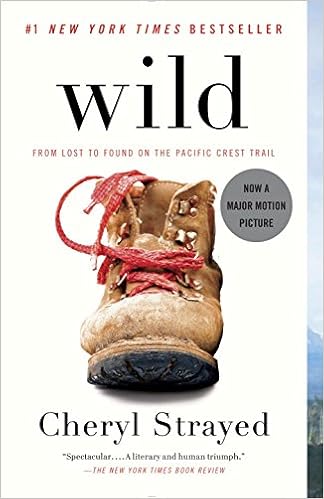
July 2015: Wild by Cheryl Strayed - Discussion Highlights

We had a great summer meeting with remarkably high numbers for July (I think the doodle for summer meetings really helps.  Note to self: let's do that again!) and a invigorating discussion about Wild by Cheryl Strayed

What we liked:

  • the writing itself was very well done; most of us had no troubles reading the book and even found ourselves hooked in places; although as one lady mentioned, sometimes it was the can't-look-away-as-you-pass-a-car-accident kind of hooked!
  • we really admired CS for the accomplishment of actually walking the trail.  That was a real physical feat and it must have been incredibly tempting to just give up... especially with danger from animals, lost boots and aching body parts.
  • we liked the very real picture of grieving: the time this takes, the very real toll of grieving and how sad it is that in the absence of a hope of resurrection in Christ, there is very little real comfort to be found 
  • that CS takes books along on her journey and we wondered what books we might have taken... because, of course, we would have taken books too!


What we didn't like:

  • we pretty unanimously did not like CS.  Her life was a bit of train-wreck - and you wanted to feel sorry for her - but much of the wreck was her own making, and she seemed oblivious to her part in the mess of her life.  We were bothered by the fact that she takes so little responsibility for the hurts that she caused - her resentments, her treatment of her husband, her affairs and subsequent sleeping around (even the way she continues to eyes men on the trail as potential conquests), her episode of foolish drug use and her unintended pregnacy and the casualness of her abortion. 
  • we were frustrated by how poorly prepared and unaware of danger CS was.  She definitely did not have enough fear... although if she did, she likely never would have begun this journey!


What we ate:

  • well, we covered a lot of the foods that CS indulged in at her stops along the trail - and we did it all in one go!  Thanks for all the delicious treats, ladies!  

Who we would recommend this book too:
  • we didn't think that this book was either a must-read or a fun beach-read
  • maybe as a warning to anyone thinking of a long distance hike like this: be prepared!
  • autobiography fans :-)
  • that said, many of us expressed interest in watching the movie to see if CS was more likable and how the movie told the story, which really is lots of painful walking with flashbacks


Friday, April 10, 2015

April 2015: The Little Old Lady - Discussion Highlights

We met on a foggy Thursday night and enjoyed a fabulous dinner.  Thanks for all your delicious contributions, ladies!  I think guests at the Grand Hotel would have been impressed... and the old age home residents and prisoners would have loved it!.  We ended the evening with a selection of decadent desserts and some laughs. 

Things we liked about the book:

  • a fun, easy read
  • we liked the spunk of the old people and the really great friendships that they shared
  • Martha... she's definitely the most well rounded of the oldies and we all really liked her
  • we had fun comparing life in the old age home, prison and the Grand Hotel and admiring how well the oldies adapted to each environment.  We'd definitely choose to spend our retirement days in the Grand... all 3 locations had their limitations, but the Grand certainly offered the most freedom and opportunity!
  • we had a good discussion about the elderly... what it meant to grow old (but still be young at heart); the need for safe, but stimulating environments with lots of freedom; what kind of old people we'd like to be; and our relationships with the elderly people in our lives.


Things we didn't like about the book:

  • we would have liked more of a back story about each of the characters so that we'd feel like we really got to know them
  • the book may have suffered from translation... it has it's funny moments, but some laughs were likely lost along the way
  • it lacked the clever writing of books like The 100 Year Old Man Who Climbed out the Window and Disappeared.


We'd recommend this book:

  • to someone looking for a fun beach read
  • most of us agreed that we'd read the sequel (The Little Old Lady Strikes Again) just for fun, but that it wasn't a must-read or a must-buy 


Monday, January 19, 2015

I Know Why the Caged Bird Sings: discussion highlights

We met on Jan. 8th to discuss I Know Why The Caged Bird Sings by Maya Angelou. It was a small group of 3 but we had a nice evening together talking about the book and eating yummy food. We ate sweet and salted chocolate cake, Cherry pie and egg nog loaf. It was all so good :)

   In I Know Why The Caged Bird Sings Maya Angelou describes her coming of age as a insecure black girl dealing with a lot of racism. Maya’s parents divorce when she is only three years old and ship Maya and her older brother, Bailey, to live with their paternal grandmother in Stamps, Arkansas. Their Grandmother whom they call Momma, runs the only store in the black section of Stamps and becomes the central moral figure in Maya’s childhood.

   When Maya is eight, her father, of whom she has no memory, arrives in Stamps unexpectedly and takes her and Bailey to live with their mother, in St. Louis, Missouri. Beautiful and alluring, she lives a wild life working in gambling parlors. One morning her live-in boyfriend, Mr. Freeman, sexually molests Maya, and he later rapes her. They go to court and afterward Mr. Freeman is violently murdered, probably by some of the underground criminal associates of Maya’s family.

   To Maya’s relief, but Bailey’s regret, Maya and Bailey return to Stamps to live with Momma. Momma manages to break through Maya’s silence by introducing her to Mrs. Flowers, a kind, educated woman who tells Maya to read works of literature out loud, giving her books of poetry that help her to regain her voice.

   At age ten, Maya takes a job for a white woman who calls Maya “Mary” for her own convenience. Maya becomes enraged and retaliates by breaking the woman’s fine china. At Maya’s eighth grade graduation, a white speaker devastates the proud community by explaining that black students are expected to become only athletes or servants. When Maya gets a rotten tooth, Momma takes her to the only dentist in Stamps, a white man who insults her, saying he’d rather place his hand in a dog’s mouth than in hers. The last straw comes when Bailey encounters a dead, rotting black man and witnesses a white man’s satisfaction at seeing the body. Momma begins to fear for the children’s well-being and saves money to bring them to their mother.

   When Maya is thirteen, they move to live with their mother in Los Angeles and then in Oakland, California. When she marries Daddy Clidell, a positive father figure, they move with him to San Francisco, the first city where Maya feels at home. She spends one summer with her father, Big Bailey, in Los Angeles and has to put up with his cruel girlfriend, Dolores. After Dolores cuts her in a fight, Maya runs away and lives for a month with a group of homeless teenagers in a junkyard. She returns to San Francisco strong and self-assured. She defies racist hiring policies and becomes the first black streetcar conductor at age fifteen. At sixteen, she hides her pregnancy from her mother and stepfather for eight months and graduates from high school. The account ends as Maya begins to feel confident as a mother to her newborn son.

   We all enjoyed readying this book but wouldn't recommend this book to just anyone. It is an autobiography but it does have some fiction. We thought Maya did this to add details that might not have happened to fill in the blanks and to lighten the tone up as there is a lot of seriousness and sadness going on. All in all we enjoyed reading this book.

Friday, October 3, 2014

Miss Peregrine's Home for Peculiar Children, Discussion Highlights

We met on a cool fall evening, 11 of us gathered cozily around the dinner table, for a feast in honour of the first meal shared by Jacob, Miss Peregrine and the peculiar children.  We enjoyed roasted chicken, salmon with a lemon dill seasoning, steamed mussels, roasted vegetables, warm bread that was (quite literally) still cooling from the oven, and all manners of jellies and sauces, followed by a dessert of chocolate pudding, and pound cake with fresh raspberries.  I'd say we did a pretty good job of re-creating the feast Jacob describes below:

"When the covers were finally lifted, a feast of kingly proportions was revealed: a roasted goose, its flesh a perfect golden brown; a whole salmon and a whole cod, each outfitted with lemons and fresh dill and pats of melting butter; a bowl of steamed mussles; platters of roasted vegetables; loaves of bread still cooling from the oven; and all manners of jellies and sauces I didn't recognize but that looked delicious." 

All in all, most of us greatly enjoyed the book and in particular, we enjoyed the experience of the peculiar photographs which somehow seemed to provide "credence" to this fantastical story.  For the most part, we were able to suspend our disbelief to enjoy the story as it unfolded, through time loops and suspended aging, though some of us were trying to make sense of some of the inconsistencies present regarding the characters across the time loops. 
Each of us agreed that the setting of the "children's home" and the accompanying foggy weather created a great story line and added suspense and uneasiness to Jacob's initial visit, not to mention all that was present inside the ruins of the bombed home.
We each had some peculiar children that we particularly liked, and this led our discussion to what it might be like to possess any/one of these "powers." Though we all agreed that any "power" would only be favourable to us if we could choose when it came and went, versus having a "power" indefinitely.
Overall, we would recommend this book to others, and a few books were passed around on loan for some of the teen/tweens in our families, as this book is described by some as a "classic quest story" whereby Jacob undertakes a difficult journey and is transformed in the process.
Several of us are looking forward to the second book in this series, "Hollow City" and it was recommended as a possible book choice for next October.


Wednesday, July 30, 2014

In A Sunburned Country Discussion Highlights

 We met almost one month ago to discuss "In A Sunburned Country" by Bill Bryson, it was a small group with only three of us there but a great discussion nevertheless! We ate shrimp on the Barbie, watermelon on the Barbie and sausage rolls heated on the Barbie (Just like the Aussies do it:). Later we indulged in Pavlova, which was super yummy!!

 A very interesting book, filled with informative, weird, funny little anecdotes about the people he met and the things he learned. The books covers a lot about Australia's history, weather climates, natural wonders, bizarre people and a whole slew of deadly creatures! Australia is home to fluffy Caterpillars that can kill you, species of spiders that can kill you with just a pinprick of venom, and the worlds deadliest snake, the taipan. (fifty times more venomous than a cobra!). Not to mention there are sharks, poisonous jellyfish ("blueys"), and man eating crocodiles. And desert, lots of unforgiving desert! While most Australians aren't bothered by the rest of the lot, the crocodiles even scare them!

 Bill Bryson really gives us an idea of how enormous Australia really is and how most of the population is in the big coastal cities (Perth, Sydney, Melbourne, Brisbane, etc.). He gives a sad view of the Aboriginal people of Australia who have been co-opted out of society and live in a fringe and destitute world.

 We all agreed that Bill Bryson's sense of humour and wit is what kept you wanting more and is the reason we would pick up another book by him! He has a way of putting humour into diverse situations and will make you laugh out loud throughout the book!

 Who wants to take a trip to Australia?!

Saturday, May 3, 2014

Discussion Highlights - The Railway Children by E Nesbit

We had a fairly large group this month so we had lots to discuss. I think it is fair to say we all really enjoyed the book and would let our children read it or have it read to them.

What we liked:
- It was an easy read.
- We enjoyed the sibling group aspect of the children. It was very realistic to now a days.
- The freedom the children experienced living in the country. They were able to run free and be kids where as in their previous home they did not have this opportunity.

What we disliked/didn't agree with:
- We had mixed opinions about whether mother should have told the children about where their father really was. Some of us thought she should have told them as we thought they were old enough to handle it while others in the group thought it was better to let them be kids and not let them worry about their father and what he was going through.
- We also had mixed thoughts as to why mother moved the children way out into the country. We understood that they had to downsize due to finances but why move so far away. Some of us thought mother did this to protect the children from hearing about their father. In the end we all agreed it was good for the children to experience the freedom of country life.  

For the food we decided to have a combination of the dinner the family had their first night at "Three's Chimney" and the dinner that was laid out for them. So we had cold roast beef, bread and butter, biscuits and sardines, sticky cinnamon buns, salad with dried cranberries, chocolates, apple pie and marmalade.

Monday, March 10, 2014

Discussion Highlights - The Paris Wife

We ended up with a very little group this month, but had a wonderful and spirited discussion about The Paris Wife nonetheless.  We all enjoyed the book tremendously and we easily sailed through all 22 discussion questions.

What we liked:
- we enjoyed the writing in the book.   We felt like we "knew" Hadley, Hemingway and 1920's Paris as they really came to life in the book
- we liked how Hadley's love for Hem comes through in the book... even in the darkest days of their relationship
- we loved the sprinkling of other historical characters throughout the book and the sense of a vibrant artistic life in Paris at the time
- none of us had read A Movable Feast by Hemingway (though some of us had read others of his books) and we would love to add it to our reading list some time to see these events through his eyes

What we disliked:
- that so many of you were missing ;-)  We hope that you read and enjoyed the book and we look forward to chatting with you about it when we see each other next.
- we wished that Hadley had a something more of her own to devote herself too (she plays the piano, and later cares for Bumby, but beyond that, she seems to be just filling her time with leisure activities).  If she had something larger and more significant to spend her free time on, she may have been less restless and lonely.

What we ate:
- enjoyed a fresh green salad and a surprisingly delish liver fried in bacon
- ended with some elegant pastries, tea and chocolate

Friday, February 21, 2014

The Doppler Effect...

We had a good turnout for our February couples' night, with five couples in attendance, and we had a fun evening together discussing Doppler.  (And the value of a post secondary education.  But we won't get into that here.) :P


 Feelings about the book were mixed, ranging from those who loved it to those who thought it was a complete waste of time, with a few "neutrals" in between.  Several of us found that it took a few chapters to really get into the book, and one reader did not even bother to continue past chapter one. :)


Although most of us could sympathize with the attraction of sometimes leaving all our responsibilities and cares behind, and living in the woods, we did not approve of Doppler's choices.  We felt he was extremely selfish, and his actions of desertion and theft were unjustified.  We did find it amusing that despite his insistence that he was leaving everything behind, he pitched his tent just a few yards off the main trail, and then proceeded to complain when others entered his sanctum.


We could not come to a consensus regarding Bongo's role in the book; some felt that he was merely a pet, while others felt that he was almost a replacement child for Doppler.  Either way, it was weird that Doppler carried on conversations with an unresponsive moose.


Most of us found the ending unsatisfying, as there was no resolution, simply the note "to be continued".


Very few of us would recommend this book to a friend.

Saturday, October 5, 2013

The Sweetness at the Bottom of the Pie Review

 Some of us really enjoyed this witty book and others only kept reading for the sake of book club. Flavia was an interesting 11 year old character! A few of us thought she was a little too much and not your typical 11 year old. There was nothing really sweet about Flavia she was in our opinion a little psycho. If you look at how she was brought up, no mother, a father and sisters who don't care what you do as long as your home for meals, its no wonder she is the way she is. Flavia's relationship with her father is not much of a relationship. She has a  moment with her father in the jail, Bradley writes it so well, "And so we sat, Father and I, primly, like two old women at parish tea. It was not a perfect way to live one's life, but it would have to do." That was the extent of their relationship.

 Bradley has a charming way of writing and does a great job of describing Buckshaw especially Flavia's laboratory. One reason some of us would pick up more of his books would be to visit Buckshaw estate again and to see what Flavia is up to.

 Another favorite paragraph was "It's a fact of life that a girl can tell in a flash if another girl likes her. Feely says that there is a broken telephone connection between men and women, and we can never know which of us rang off. With a boy you can never know whether he's smitten or gagging, but with a girl you can tell in the first three seconds. Between the girls there is a silent and unending flow of invisible signals, like the high-frequency wireless messages between the shore and the ships at sea, and this secret flow of dots and dashes was signaling that Mary detested me."

 Over all a light fun read with not much of a mystery.

 One question we all want to ask Mr. Bradley "Who on earth changed Flavia's diapers when she was a baby?!!"

Wednesday, October 2, 2013

The Painted Girls - Discussion Highlights


We had the opportunity to skype with Cathy Marie Buchanan for about half an hour at the start of our meeting.  She provided us with information on how the idea for the book came about, and the  detailed research that she did to prepare for the writing of this book. This was the second time this book club had the opportunity to skype with Cathy, and it was neat to hear from an author on  what it takes for a book to be published

Overall the book was liked by us, there are some parts of it that are somewhat graphic and perhaps too detailed/explicit (which lead  most of us to conclude that this is a book we would  recommend with reservation).   The author does a good job of honestly depicting what really happened during the 1800's  to these three young sisters who had no real protection, no one to  stand up for them, guide them or provide for them. Most of the men in the story took advantage of the girls in some way, with the exception of the baker, a favorite of those reading.

These sisters sometimes made mistakes, but support each other the best they can under the difficult circumstances in which they live; it was felt that neither Marie or Antoinette would have been able to survive if they did not have each other.

We had an assortment of french cheese with crackers and pastry (Boursin is our new favorite cheese :), with Madeline's and eclairs for dessert!


Monday, August 19, 2013

Stories from the Vinyl Cafe - Discussion Highlights

What we liked about the book:

  • we listened to the story "Home Renovations" on CD read by Stuart McLean and laughed a lot; he is a great story teller with terrific comic timing and a pleasant voice and he reads even the most hilarious sections in a calm, no nonsense voice.  Now, who would like an outlet for the toaster close to the dining room table?!
  • we liked how the stories he told were based on ordinary people and ordinary life situations.  We could relate to many of the situations.
  • we liked the Canadian- it's-okay-to-laugh-at-yourself humor throughout the book.  We appreciated that the humor remained gentle and not derogatory.
  • we like Dave, Morley, Stephanie and Sam.  Many of us would have been happy to meet them or have them as neighbors.
  • we like the short story format and the fact that each story was complete enough and separate enough to be read on the beach or in the middle of a busy afternoon.

What we didn't like about the book:

  • some of the stories (in his books or on the radio) contain offensive language that seems so unnecessary and prevents the stories from being family entertainment... that's a shame
  • some of us felt that the stories had little "point" to them and were quite forgettable.  Others disagreed and thought that the humorous situations and some of the characters/relationships were quite memorable and the point of the stories was to see your own life/family/neighborhood reflected in the stories and to take a moment to laugh at the absurdities of life.


What we ate:

  •  Sarah hosted a regular coffee shop buffet!  We had bagels with cream cheese - toasted, plugged in near the table :-) - home-made cinnamon buns, strawberry rhubarb pie, brownies, carrot cake, pastries, donuts and more.

Friday, July 5, 2013

Cutting for Stone - Discussion Highlights

What we liked about the book:
  • the epic nature of the story that covers so many different members of the "family" (even when we got the story lines confused)
  • the intensified sibling relationship and rivalry between Marion and Shiva and the completely different paths their lives take even though they were raised the same
  • Ghosh... what a rock of a husband, dad and doctor
  • some of us really enjoyed the historical background, while others felt it bogged down the story
  • an overall good read - well written, quick paced and lots of interesting characters and settings
What we didn't like:
  • some of the medical/surgical scenes were cringe/vomit inducing
  • some elements of the story were difficult to believe based on what was revealed about those characters... for example, based on what we know of Sister Mary Joseph Praise, would she really use sex to comfort a distraught Thomas Stone?  Doesn't seem believable.  Also, when Genet comes to Marion in the end, would Marion really treat her like that... after all that "waiting for everything to be perfect" would he really claim her in such an animalistic way?  Seems so out of character.
  • some of us felt that the ending was just too tidy... Stone has to use his specialty to operate on his 2 doctor sons; the trouble-some son dies; then Marion returns to Missing with his mother.  Oh, and Genet is neatly killed off, too.
What we ate:
  • mmmm... smoked paprika beef and onions with warm naan bread and a cool cucumber and tomato salad; then we  finished off with a amazing fruit platter and strange deep fried ricotta cheese puffs and a cup of tea.  
  • Ethiopians definitely need to be introduced to decadent chocolate desserts!

Tuesday, November 13, 2012

Factory Girls meeting highlights

With several ladies not able to make it to the meeting, we had a smallish group of just six...which was fine, because that meant more yummy food for us! :)

All of us enjoyed the book to varying degrees.  The majority of us found the writing style, due to the author's journalistic background, very disjointed, which did not always make for enjoyable reading.  We were surprised to discover that as a whole, the migrants liked their lives and their work; we had envisioned a book detailing the terrible working conditions and poor wages and so on, much like The Jungle, but we found this not to be the case at all.  We wondered if the author had entered into the story with the same expectation, and was as surprised as us at her discoveries.  We did note, however, that the unhappy migrants and the harsh factories would have been far less likely to talk with the author, and so we questioned the reliability of the data, as it might not give us the "whole picture".


Some of us enjoyed the story of the author's own family, while others felt like it didn't really belong in the book.  We were all surprised by the way that the migrants behaved when they returned home, mostly sitting around the house and watching TV.  We determined that if the communist government would allow the broadcast of more western shows in English, at least the time spent watching TV would not be completely wasted, as they could learn some English from it.  :)