Showing posts with label Danielle. Show all posts

Monday, August 14, 2017

September 2017 - The Prime of Miss Jean Brodie by Muriel Spark


Penguin Essentials The Prime Of Miss Jean Brodie by Muriel Spark

Meeting Details:
We're getting together at Danielle's house on Thursday, September 7th at 7:30 pm, with discussion to begin at 8 pm.

Discussion Questions:
1. Did you like the book? Why or why not?

2. What is Miss Brodie's "prime"? What does she mean by the term and why is it so significant—she announces it to her class and refers to it time and again? It also brought up in the last line of the book.

3. Do we ever learn why she selects the particular girls she does as her Brodie girls? Talk about the girls, their relationships with one another, and their relationship with the school. Are they individuals...or conformists?

4. What is Miss Brodie's purpose in creating the Brodie set? Is it purely educational...or something else? What does she want for (or from) them? In what ways, if at all, does the Brodie set change over the years? Do the girls alter their feelings for Miss Brodie by the time their schooling ends?

5. What do you think of Miss MacKay, the headmistress, who continually attempts to undermine Miss Brodie? At the end, she says to Sandy, "I'm afraid she put ideas into your young heads." Why has that bothered her for so many years? Is that not precisely what education is about, at least Miss MacKay's own philosophy of teaching? Is Miss MacKay a watchful headmistress doing her job? Or is she inhibiting a vibrant, creative teacher?

6. We know Miss Brodie only through the eyes of the girls, primarily Sandy. How does their perception of her change by the time they are 17 years of age...and also when they are even older?

7. Muriel Spark wrote with a great deal of wit, and her humor is particularly evident in this novel because we view the adult world through the eyes of innocents. What are some of the sections you find particularly funny?

8. Is Miss Brodie a good person? Is she a good teacher? Try, in fact, to explain the enigma that is Miss Jean Brodie? What, for instance, is her background—do we ever find out?

9. What about Teddy Lloyd and Gordon Lowther, Miss Brodie's two love interests? What does she want with them? She refuses Lowther's entreaties to marry her—why? And more mysteriously, she encourages Rose to have an affair with Lloyd—why, again?

10. When she is finally betrayed, was the one who did so right or wrong? What prompted the girl tell Miss MacKay what she told her? Was it a betrayal?

11. In the final analysis, how do you come to think of Miss Brodie? Is she a noble figure? A tragic one? A visionary? Is she silly? Is she dangerous or well-meaning? What impact did she have on her girls, lasting or short-term?

12. Would you recommend the book? Why or why not?

(Questions 2-11 by LitLovers.)

Menu: "A Scottish Tea at Twilight"

Let's sit in the twilight, either on the carpet like Sandy and Jenny or on my couches, and discuss Miss Jean Brodie and her girls, while enjoying delicious Scottish desserts. And we can toast to the fact that we, fellow book clubers, are the creme de la creme! :) (how's the for post-survival summer vacation encouragement ;) )

Scottish Shortbread

Old Fashioned Raspberry Buns

Scottish Berry Brûlée - Emily

Scottish Oat Cakes

Udny Arms Sticky Toffee Pudding

Apple Shortbread Pie

Scotch Teas (this is actually a food!) - Tessa

(Recipes can be found here: 
http://www.dailyrecord.co.uk/whats-on/food-drink-news/10-delicious-scottish-dessert-recipes-7669051
Or Google/Pinterest)

Drinks: Danielle


Thursday, October 27, 2016

Nov 2016: The Night Circus by Erin Morgenstern


Meeting Details:
Thursday, November 3rd at Danielle's house; meeting starts at 7:30, with discussion beginning at 8pm

Discussion Questions:
1. Did you like the book? Why or why not?

2. The Night Circus is not written in a linear timeline. Did you find the structure of the book disorienting? Do you think it was effective in mirroring the nature of the circus or did it just annoy you?

3. Between the chapters that tell the story of The Night Circus are descriptions of the circus itself, written as if you are visiting it right now. What do these chapters add to the story?

4. What was your favorite part of the circus? Which character would you most want to meet? Which tent would you most want to visit? Which food sounded most appealing?

5. Why are Frederick Thiessen and the reveurs important to the story? Why do you think some people were so entranced by the circus that they devoted themselves to following it around?

6. Did you feel sorry for those who were being used in the game -- Isobel, the Burgess sisters, even Celia and Marco? Why do you think some people, like Mr. Barris, don't mind being trapped by the circus while it drives others, like Tara Burgess, mad?

7. Why do you think Bailey was willing to give his life to the circus?

8. Discuss themes of good and evil and free will verses being "bound."

9. What did you think of Marco and Celia's relationship? Why did they fall in love?

10. Why does the man in the grey suit feel so passionate about stories? What sort of commentary do you think the chapter "Stories" is on the novel? On life?

11. Would you recommend the book? Why or why not?

**I have not finished the book yet, so the questions may change. The above were taken from goodreads.com.

Menu: Let's go to the Circus!

Caramel Apple Dip (instead of caramel apples), pg. 50, 125-127, 385 - Emily
Scones with Jam and Clotted Cream, pg. 39 - Tessa
Mini Cinnamon Buns (in place of cinnamon rolls), pg. 195-196 - Melissa
Popcorn, pg. 51, 125-127, 143 - Danielle
Chocolate Mice (with almond ears and licorice tails), pg. 170, 195
Chocolate Covered Strawberries, pg. 228, 276 - Karen
Black and White cookies (as the Night Circus is all black and white)
Vanilla Meringues (they look like tiny circus tents!)

Drinks: (Danielle)
Cider, pg. 50, 109, 111, 143, 171-172, 175
Cocoa, pg. 195-197
Sparkling wine, pg. 58
Coffee/tea/water

Saturday, September 26, 2015

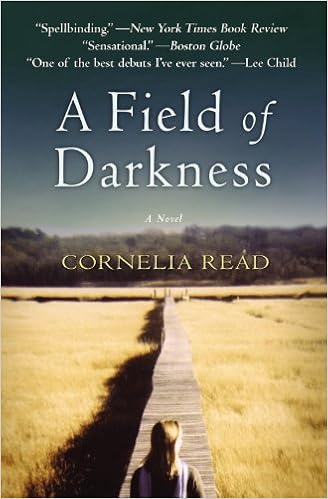
October 2015: A Field of Darkness by Cornelia Read

Meeting Details:
When: Thursday, October 1st
Time: 7:30 p.m. with discussion beginning around 8
Where: Danielle's House

Discussion Questions:

1. Did you enjoy the book? Why or why not?
2. Cornelia Read shares a lot of similarities with her protagonist, Madeline Dare. She comments, "In some senses, Maddie's who I'd like to be. She's tougher and braver than I am, not to mention way more handy with shotguns and snappy comebacks." If you were to base a novel on your life, how would you shape your own character?
3. Despite near-death experiences, Maddie relentlessly investigates the secrets surrounding the dog tags. Why do you think she is so compelled to uncover the truth?
4. Maddie is confronted by shocking and harrowing events throughout the novel. How do these experiences impact her? How does her character change or remain the same by the end of the novel?
5. Cornelia notes, "To me, the most important thing Madeline learns in A Field of Darkness is that her heritage can't dictate her destiny without her consent." What elements of Maddie's past haunt her the most? How is she able to overcome them?
6. A Field of Darkness begins with Maddie pondering her sense of place: "There are people who can be happy anywhere. I am not one of them." The setting in this novel switches between rural Syracuse and posh Oyster Bay. How is Maddie situated in each place? Where does she belong?
7. Maddie would be the first to tell you that her family's money is so old there's none left. Still, many of her Long Island relatives have married into wealthy families and enjoy lifestyles as extravagant as their predecessors. Consequently, Maddie feels like a foreigner when she visits her relatives. Discuss her position as an outsider looking into her own family.
8. Fleishmann tells Maddie how to discover someone's secrets in their face: "You have to look and look, until the secrets come out. They cannot stay hidden if you are quiet for long enough, because the secrets are foolish and they have no patience." As Maddie strives to discover the truth about the past, she discovers that people are not always as they seem. Discuss the secrets that characters strive to protect in this novel and why they are being hidden.
9. A Field of Darkness is filled with intriguing characters. Which characters would you have liked to know more about? Why?
10. Maddie and Dean will return in Cornelia Read's next novel. Can you predict how their lives might change after the events of A Field of Darkness? What would you like to see happen?
11. Would you recommend the book? Why or why not?


Menu: 'Autumn, the year's last, loveliest smile.'

Bring your favourite fall dish, as we enjoy the most beautiful season of the year!

Starters:
Favourite coleslaw salad
Favourite bread/biscuit
Favourite butternut squash soup
Favourite sweet potato soup

Main:
Favourite chicken dish

Dessert:
Favourite spiced cake recipe
Favourite pumpkin recipe

Drinks:
Warm Spiced Cran-Pom Toddies - Danielle
Coffee/Tea/Juice - Danielle


Thursday, February 26, 2015

March 2015: The Pearl That Broke Its Shell by Nadia Hashimi

Meeting Details:  
Where: Danielle's house 
When: Thursday, March 5th
What time: 7:30 pm, with discussion to begin at 8:00 pm
Discussion Questions:
1. Did you like the book?  Why or Why not?
2. Rahima says that Khala Shaima’s story about Bibi Shekiba transformed her, and indeed, this is a novel about transformation. In what ways, besides dressing as males, do Rahima and Shekiba transform themselves?

3.  When we first meet Khala Shaima, we see that men frequently mock or insult her because of her crooked spine, but her nieces and sister don’t seem to pity her. Does Khala Shaima’s disability work to her advantage?

4. Rahima loves being bacha posh for the freedoms it brings; being able to work in the market, play soccer and go to school. What are the disadvantages of her newfound freedoms and what are the consequences for Rahima and her family?

5.  “It is up to you to find a way to make things easier for yourself,” Shekiba’s aunt tells her. How do the different women characters in this novel find ways to make things easier for themselves? What about Rahima’s mother? Bobo Shagul? Abdul Khaliq’s wives? The women of the king’s harem?

6. Rahima says of her sister Parwin: “In some ways, I think she was the bravest of all. She, my meek and timid sister, was the one who acted in the end. She was the one who showed those around her that she’d had enough of their abuse. As Khala Shaima said, everyone needed a way to escape.” Do you agree?

7. Shekiba envies the women of the harem: “At least they belonged to someone. At least they had someone to care for them, to look after them.” Do you think the King’s concubines live an enviable life? Are they better or worse off than women who live outside the palace walls?

8. The word naseeb, or destiny, comes up often in THE PEARL THAT BROKE ITS SHELL, as each woman is repeatedly told that she must accept her fate. When Rahima asks Khala Shaima “Wouldn’t people say that is blasphemous? To change the naseeb that Allah has for us?” her aunt responds “…you tell me which of those people who say such a thing have spoken with Allah to know what the true naseeb is.” When do Shekiba and Rahima accept their naseeb and when do they rebel against it? Do you believe in the concept of naseeb in your life?

9.  What do you make of Shekiba and Rahima’s experiences with their husbands’ other wives? Are they helped or harmed by them? Could you adapt to that kind of married life?

10.  When Bibi Gulalai opens up to Rahima about her own abusive mother-in-law, Rahima thinks “In other circumstances, I might have told Bibi Gulalai that I understood, that I could sympathize with her.” Does Bibi Gulalai’s revelation change the way you see her? What inspires or empowers the cruelty of older women like her and Shekiba’s grandmother, Bobo Shahgul?

11. How do Rahima’s years as a bacha posh ultimately help her escape her marriage to Abdul Khaliq?

12. Do you believe that Rahima and Shekiba’s stories end happily? What do you think became of them in the years after this book ends?

13. Would you recommend this book to others? Why or why not?


Menu - A Taste of Afghanistan

Let's try a little of this, and a little of that, from the Country the book is based in!

There are recipes on this website: http://www.litlovers.com/book-club-recipes/7960-menu-Afghanistan (or feel free to research something else!)

Appetizers:

Savour Pastry Triangles
Spinach & Yogurt Dip
Vegetable Fritters

Side/Salads:

Noni-Flatbread

Desserts:

Afghan Fudge
Creamy Milk Pudding
Elephant Ear Cookies

Drinks: Danielle

*There are no main dishes listed so that it's a bit more nibbly and less of an issue if anyone drops out last minute. However, if we have a full crowd and someone would like to bring one, feel free!

Please add a comment with what you would like to bring!

Saturday, March 29, 2014

April 2014: The Burgess Boys by Elizabeth Strout

The Burgess Boys by Elizabeth Strout (is anyone having difficulties getting their hands on a book?)


Meeting Details:  The plan is to meet at Danielle's house on Thursday, April 3rd at 7:30pm with discussion to begin at 8pm.    Reminder email will be sent out later next week
Discussion Questions:
*I have not finished reading the book. This questions may or may not change once I'm done :)
1.  Did you enjoy the book?  Why or why not?

2. Talk about how Bob, who at the age of four was held accountable for his father's death. To what degree has that childhood trauma shaped his subsequent life? The family never mentions the fatal accident. Why?

3. What about the personalities and life trajectories of the three siblings—and the differences between them? Start with Jim and Bob; then Bob and his twin sister, Susan. How do they feel about one another—and how do they treat each other? How do those relationships change by the end of the story?

4. What do you think of Helen? Are you sympathetic to her?

5. This novel is very much about place and sense of home. How do the physical manifestations of the sibling's homes, their houses or apartments, reflect their inner lives? How do the brothers view their Maine hometown...and how does Susan view New York City? How do the Somalis view Maine and their new (perhaps temporary) home in Shirley Falls.

6. How has Shirley Falls changed over the years since the three siblings grew up and the two brothers moved away? Is Shirley Falls typical of small-town America?

7. What prompts Zach to throw the pig's head into the mosque? He later explains his action as a "dumb joke." What do you think of Zach? Does a 19-year-old boy deserve to be arrested and charged with a Federal hate crime?

8. Discuss the relations between the locals and the Somali Muslim population living in Shirley Falls. How do the two populations view one another? What humiliations do the Muslims undergo at the hands of the native Mainers?

9. Zach finds an unlikely ally in Abdikarim. What is it about Zach that encourages the older man to feel sympathy for him? What are Abdikarim's own demons? Talk about the differences in the two worlds of Abkikarim: the colorful market of the Al Barakaat in Somalia and the drab greyness of the small town in Maine.

10. Talk about the way in which the prevailing political pressures shape legal strategy.

11. Why is Bob so hesitant to accept Jim's view of the accident?

12.  Would you recommend this book to anyone else?  Who?  Why?

* most of the questions from litlovers.com

Menu:  "Starved for Sweetness"

"While the Burgesses seemed to have no knowledge of, or interest in, food (there were meals of scrambled hamburger covered with an unmelted sheet of orange cheese, or a tuna casserole made with canned soup, or a chicken roasted without any spices, not even salt), Pam discovered that they loved baked goods, and so she made banana bread and sugar cookies, and sometimes Susan stood in the small kitchen and helped her, and whatever was baked was eaten hungrily, and this touched Pam as well - as though these kids had been starved all their lives for sweetness." p.107 

Banana bread - Stephanie

Sugar cookies - Trish

Pound Cake - Tessa

Chocolate Zucchini Loaf - Karen

Peanut Butter Oatmeal Bars - Melissa

Chocolate Chip Cookies - Sherrie

Drinks - Danielle

Tuesday, May 28, 2013

June 2013: Bloodletting and Miraculous Cures by Vincent Lam


Meeting Details - we are meeting on WEDNESDAY, June 5th at Danielle's house at 7:30; discussion to begin as close to 8pm as we can manage.  :-)

Don't have time for the whole book this month?  Try chapters 1,3 and 11 (How to Get into Medical School I and II, and Contact Tracing) which follow Ming, Chen and Fitz.

Discussion Questions:
(questions #9 and #11 are optional, depending on how many people read the stories referred to in those questions)
  1. Did you enjoy the book?  Why or why not?
  2. Which was your favorite story?  Why?  Do you think the stories are enhanced by being read together in this collection or would each story have a great impact on it's own?
  3. Were you able to relate to the characters and the situations they faced based on your own experience in the health care profession? Were they believable characters, and who could you most relate to?
  4. Were you more interested in the characters or in the medical situations?
  5. Did you find certain medical scenes in the book "sickening"?  Which one(s)?  Do you think that this was Lam's intent in the way the scenes were written?
  6. Given the popularity of medical dramas on TV, how did you find reading such material in book format? Is it fair to say it’s a closer representation of reality or not? Why do you think general public is so fascinated by medical drama?
  7. Lam’s title references “miraculous cures”—to what extent are such “cures” evident in the book? Do you think Lam is suggesting that medicine has an element to the miraculous about it? How does this notion hold out in the book, and in your own working experience?
  8. How did you feel about Fitz’s character flaws, of which there seem to be many? What sort of social responsibility does a doctor have, or accountability for his/her actions outside practice? Did you judge him for his behaviour, such as sneaking into Ming’s apartment and his drinking, or are such weaknesses forgivable given the strain of an intense medical career?
  9. How did you feel about Lam’s exposure of the negative sides of medical practice, such as the death in “Code Clock” that was clearly unnoticed by the nurse, or the biting incident in “Eli.” Does it humanize physicians and nurses, or do you think it risks creating a fearful public? In engaging with these themes, what does it indicate about how the public views physicians today—that is, no longer as inscrutable figures of authority.
  10. Lam leaves several stories open-ended—”Winston” and “Contact Tracing”—where we never learn the fate of key characters. Why do you think he did that? What do you think happens to Fitzgerald?
  11. Most of the stories are told strictly from the perspective of the physicians, but in “Winston,” “Afterwards,” and “An Insistent Tide” Lam follows the lives of patients as well. What purpose does that shift in focus serve? Did it enhance your reading, or perhaps distract you from the main storyline(s)?
  12. Why do you think Chen attempted to rescue Fitzgerald, in light of their shared history and their shared conversations in isolation?
Menu: Heart Healthy
- sandwiches (you choose)

  • egg salad with a twist - Tessa
- salads (you choose)

  • broccoli salad - Melissa
  • spinach, beet and feta salad - Sherrie
- fruit plate 

- good quality dark chocolate - Stephanie

Drinks: fruit juice/herbal tea - Danielle

Monday, June 18, 2012

Lives of Girls and Women by Alice Munro - Review

This post is a brief, brief summary of our meeting a couple weeks ago.

Discussion Review: for The Flats Road; Heirs of the Living Body; Princess Ida

Did you enjoy the stories?  Why or why not?  
  • We enjoyed the detail the author uses in describing things or events in her stories, but the story lines themselves are not all that exciting.
This book is a novel and a collection of short stories all a the same time.  What about each story allows it to stand on its own?  How do the stories tie together?  
  • Each story has it's own main point/aspect but they do not tie into eachother, other than having the same characters. So you could just read Princess Ida, without reading the first two stories in the book. But you wouldn't want to jump all over and randomly select stories to read because they do go in chronological order of Del's life.
Did reading these three stories make you want to read the rest of the book?  What about the characters makes them compelling?
  • Most of us did not read the rest of the book. There's a small interest in learning how Del evolves and grows, but because the stories did not grab our attention, it was easy to put aside. One attendee (Tessa :) ) did read the entire novel and enjoys Alice Munro. So it really came down to personal preferences.
My memory is a bit fuzzy, so I hope that I somewhat accurately summarized things. If something needs to be clarified, please do so :)