Showing posts with label Discussion Questions. Show all posts

Saturday, May 2, 2020

Virtual Book Club for May/June 2020

Fifteen Dogs cover artAnyone interested in a virtual book club?  

Here's what I'm thinking: 

  1. Listen to this FREE audiobook at your own pace (its 6 hrs 20 min long) anytime in May or June. 
  2. Answer Questions - pop on over to the blog and answer some/all/any of the questions by editing the post and adding your thoughts right here (not in the comments, where it may be hard to follow the train of thought for any particular question).  Feel free to pick&choose from the questions, based on your thoughts/interests.  Absolutely no need to answer ALL of the questions in order to participate.  Include your initials by your answer so we know it's you.
  3. Reply to some/all/any responses, if you like - check back here to see what others thought.  Add a reply directly in the post, adding your initials again.  

Here's the FREE audio book (available until June 28th)
https://www.audible.ca/pd/Fifteen-Dogs-Audiobook/B071RXCKWQ?ref=a_ep_listen_c6_lProduct_1_2&pf_rd_p=362b9add-c610-448a-acc1-59556414c4f7&pf_rd_r=N47JH4AYKKTBFSDPNDZV

Discussion Questions: 

1. Did you enjoy the book?  Why or why not?

2. What did you think of the audio version of the book?  What did you like/dislike about the way it was read?  If you haven't listened to an audio book before, would you do it again?


3. Which dog are you most drawn to? Least? Why?

4. Can you imagine how the story might have been different if Alexis had chosen cats? What about elephants or mosquitoes? 

5. Hermes and Apollo’s wager is decided by whether or not one of the dogs is happy at the moment of its death. Is it fair to evaluate the quality of one’s life by the quality of one’s end-of-life? How accurate of an evaluation is this in the case of the dogs? 

6. Prince’s poetry delights some of the dogs and enrages others. He is arguably the most isolated of the original pack. Is Alexis suggesting that art is essentially divisive? Or is Prince’s place in the pack a reflection of the nature of being an artist? 

7. Who is more cruel, the gods or the dogs? Why? 

8. Does the version of humanity Alexis presents reflect your own? In what ways do they differ? 

9. Some readers find themselves more moved by the deaths of the fifteen dogs than they would have been if it had been fifteen humans. Why do we sometimes have more compassion for animals than people? Can you think of examples of this in the real world? 


10. True to canine nature, Atticus’s pack is ruled by brute power and a clear sense of hierarchy. But Hermes and Apollo’s wager is about happiness, not power. What is the relationship between power and happiness for the dogs? Is there a clear correlation?
 
11. If you are familiar with Toronto, did the book allow you to think about the city’s landscape differently? If you aren’t, did the book offer a vivid sense of place? Why or why not? 

12. The novel is preoccupied not only with human consciousness, but also with self-consciousness. What does this suggest about human nature? 

13. Do you find the violence in this novel to be gratuitous? It has been said that violence results from inarticulateness; is it strange that the dogs seem to become more violent after they have come to possess the gift of (human) language? 

14. What does the novel have to say about the relationship between thought and language? If in some way language determines the parameters of our thinking, how does that premise underscore or complicate this idea?

15. Would you recommend this book to others?  To who/why?

Most questions found here:
http://assetlibrary.supadu.com/images/ckfinder/571/pdfs/Book-Groups/FifteenDogsPerseusReadingGroupGuide_Layout%201.pdf

Friday, February 14, 2020

Feb 2020: In the Heart of the Sea by Nathaniel Philbrick


Meeting Details:  cancelled (maybe next February?!)

Discussion Questions:

  1. Did you enjoy the book?  Why or why not?
  2. What did you know about whaling before you read the book? Did that affect your reading of the books?
  3. Would Chase have captained the Essex better than Pollard? Explain.
  4. In your opinion, why does Pollard choose to take another whaling job after the Essex disaster?
  5. Whose account of the disaster do you find more compelling: Chase's or Nickerson's?
  6. Do you think whaling is ethical? Why or why not?
  7. What do you think happened to Henry De Witt?
  8. If you were an Essex survivor, would you have kept sailing, or would you have remained on Henderson Island?
  9. Do you find the eyewitness accounts of the Essex disaster to be accurate? Explain your answer.
  10. In your opinion, what prompts Nickerson to write his own account of the disaster?
  11. Did you watch the movie version?  If so, how did it compare with the book?  What was your favorite part?  What was your least favorite part?
  12. Would you recommend this book to others?  Who and why?

Menu Ideas:  "In the Heart of the Sea"

Inspired by the sea and "hearts", let's enjoy an delicious dinner...

- Appetizer like hot crab dip or mini fish taco bites, for example

- Soup or Salad like clam chowder or a fresh green salad,for example

- Side Dish like roasted potatoes or ratatouille, for example

- Dessert like brownies with cinnamon hearts or red velvet cake, for example

Jon & Tessa will take care of the main fish/seafood dish and drinks.

Wednesday, January 8, 2020

January 2020: Born a Crime by Trevor Noah


     Details: meeting at Tamara's house at 7:30.  
     Discussion to start at 8:00

Discussion Questions:
1. Did you like the book?  Was there anything about the book that surprised you? Were you familiar with Trevor Noah before reading the book? 
2. Trevor Noah opens his memoir with a story about being thrown from a car by his mother. In what ways does this story illustrate the whole story of his early life? These stories weave themselves throughout the book, concluding with a final story about her. In many ways, the book is equally about Trevor’s mother. How would you describe Patricia Noah? 
3. A lot of what happens in this story is told with humor, even though many things were very dark. How did you respond to Trevor’s use of humor in telling stories from his youth? How did humor shape his experience growing up and in the man he became? 
4. Noah describes, with hilarious detail, an incident that happened when he was home alone with his great-grandmother (Koko) and didn’t want to use the outhouse. Which incidents, friends, or family members described in Born a Crime are most memorable to you?
5. What was the role of religion in Trevor’s family’s life? How did Patricia’s faith impact young Trevor, and what do you think has been the lasting impression of faith on Trevor Noah’s life?
6. What role does being of mixed race play in Trevor’s life? How did issues of race play out in Noah’s relationships with those closest to him — his mother, father, grandparents, cousins, and friends? 
7. Noah’s mother insists that he have a relationship with his father: “Because he’s a piece of you,’ she said, ‘and if you don’t find him you won’t find yourself.” What did you think about Trevor’s relationship with his biological father, Robert? What was Trevor’s father like? How did you view him as a person? Do you think Trevor liked/felt good about this relationship? (p. 101ff). 
8. What difference did it make that he knew he was wanted and loved by both parents? Pg 110
9. For such a strong, independent woman, who taught Trevor about valuing a woman, why did Patricia marry Abel when she said she wouldn’t consider marrying Trevor’s father? How does Noah describe and wrestle with the issue of domestic violence? How did it affect his view of local authorities and culture?  How did it shape him and his relationship with his mother?
10. How did the story of Fufi and the other boy shape Trevor’s view of relationships? Pg 100
11. In Born a Crime, Noah wants to dispel the idea that the ending of apartheid was bloodless.  How much did you know about apartheid before reading this book, and what did you learn about the history of South Africa by reading Noah’s story? Did you enjoy/appreciate the explanatory material at the start of every section?
12. Noah explains how language defines people and how it can be used to one’s advantage.  (pg 54-55) He argues that English in South Africa is equated with intelligence. Do you agree with Noah’s assessment of the importance of language? What do his claims suggest about the power of language and the values placed on certain languages over others?  Noah learned to speak six different languages growing up. What impressed you about the ways that Trevor and his mother navigate neighborhoods, cultures, and family; and how did language make that possible?
13. Since I belonged to no group I learned to move seamlessly between groups. I was a chameleon, still, a cultural chameleon” (p. 140). How is Trevor like a chameleon? Why does he do this? What benefit or cost is associated with this for him?
14. Where did Trevor fit in? Who accepted him? Why did Trevor always feel like an outsider? How did he cope with that?
15. Do you think he had a “good” life in younger years? Would you say Noah felt he had a good upbringing?
16. Would you recommend this book to others? If there is a follow-up book, will you read it?  Will you watch a film adaptation?

Menu
Let's have a community-celebrating braai like in South Africa...or as close as we can get in Canada in January! :-)  Here are some ideas, feel free to pick one or bring a different one of your choosing...
Biltong as a snack

Mains
Bbq'd meat - beef, chicken, veal, lamb, sausage... Tamara (Peri Peri chicken)
Boerewors
Pap or (samp and beans, which is apparently the Xhosa version)
Chakalaka - Marion
Bobotie
Braaibroodjies
Potjiekos
Durban Chicken Curry (with rice or served in bread, called Bunny Chow)
Salomies

Desserts
melktert - Emily?
Malva pudding - Emily?
Koeksisters
Vetkoek with a sweet twist

Amarula don pedro


Wednesday, November 6, 2019

November 2019: Family Life by Akhil Sharma

Family Life: A Novel by [Sharma, Akhil]
Meeting Details:  Thursday, Nov 7th; meeting starts at 7:30pm, with discussion to begin at 8pm

Discussion Questions: 
  1. Did you enjoy enjoy the book? Why or why not? Have you read any other books by Akhil Sharma? How does this compare?
  2. The novel opens in the present, when Ajay is forty and his parents are elderly.  How does the opening affect your experience of the rest of the novel, which takes place during Ajay's childhood?
  3. What is the books message? How did you feel about the characters? Whom did you like or not like and why?
  4. America is marvelous to the Mishra family at first.  If tragedy hadn’t struck, do you think that America would have met the Mishra’s expectations for it? Or do you think that at least certain elements of their disillusionment were inevitable?
  5. How does the Mishras’ status as immigrants affect their experience of Birju’s accident? How might their lives following the accident have played out differently if they weren’t strangers in a strange land?
  6. Describe the process through which Ajay becomes a writer. How does writing change the way he experiences his childhood.
  7. In the aftermath of Birju’s accident, Ajay’s mother turns to religion and his father to alcohol. How are these two coping mechanisms different? Do you think they have anything in common? Do you think that Ajay’s own way of coping [academic success] has anything in common with his parents?
  8. Describe the prose style in Family Life. What do you think the author achieves through the candor and lack of sentimentality in his storytelling?
  9. On the second anniversary of his brother’s accident, Ajay thinks, “I couldn’t believe that everything had changed because of three minutes” (p. 129). What do you make of this? How does the brevity of the accident itself affect your experience of the passage of time in the novel, which takes place over many years? Has your own life ever changed so drastically, so quickly?
  10. Compare and contrast the scenes when the family is awaiting news of Ajay’s college acceptances to the scenes when they are awaiting news of Birju’s high school acceptance.
  11. Describe Ajay’s love life in high school and beyond. What is he seeking from his girlfriends? In what ways is he being honest with them, and in what ways, dishonest?  How are his relationships with women affected by his experience with his brother? His experience as an immigrant?
  12. Family Life ends in a moment of ambiguity. “I got happier and happier,” Ajay says. “In the distance was the beach and the breaking waves and the red seaplane bobbing in the water. The happiness was almost heavy. And that was when I knew I had a problem” (page 218).  What is it about this moment and about Ajay’s happiness that tells him he has a problem? How would you describe his problem? Do you think he will ever escape or solve it?
  13. Would you recommend this book? Why or why not?
Menu:
- Indian or American!

Wednesday, October 2, 2019

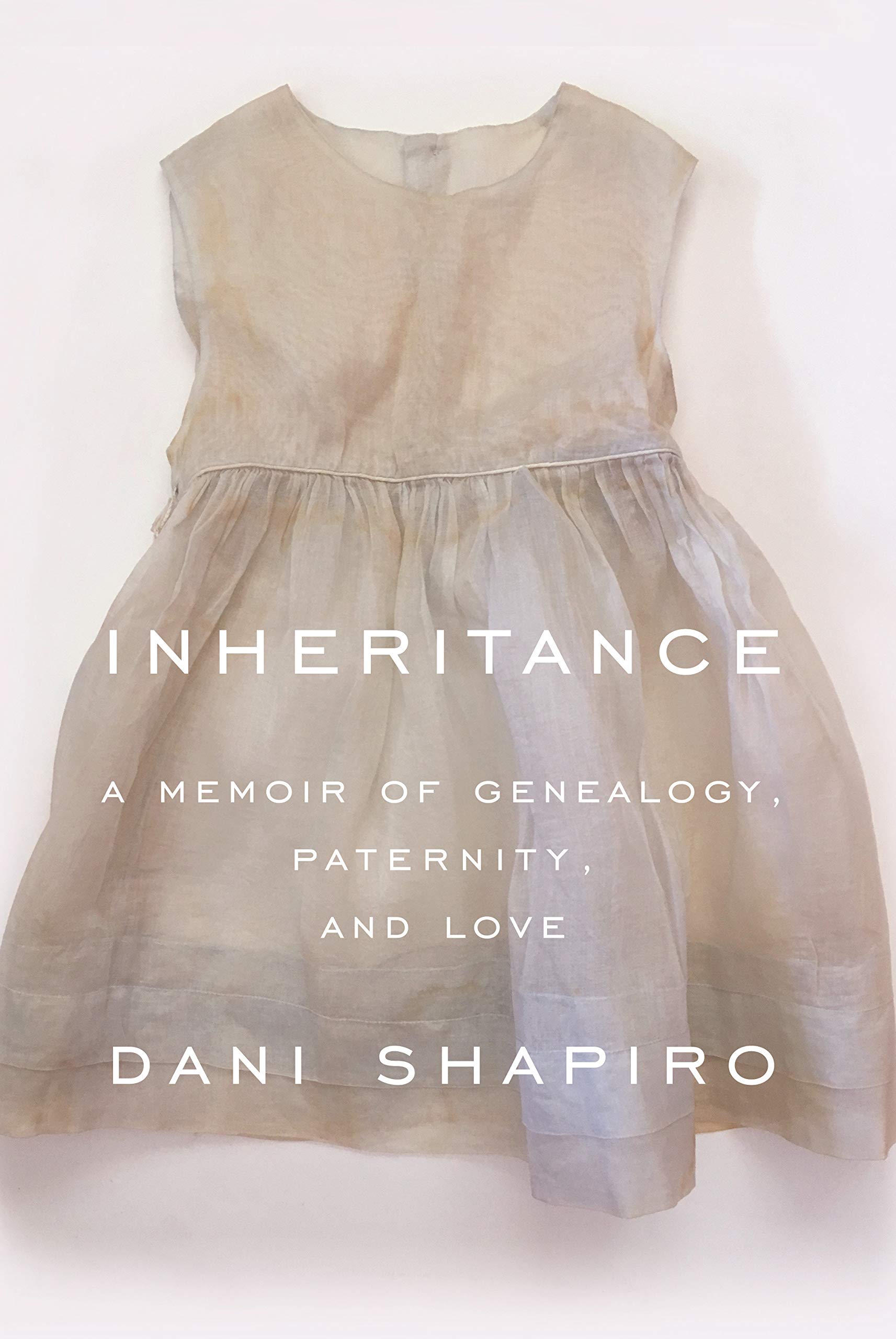
October 2019: The Inheritance by Dani Shapiro

Image result for The inheritance Dani shapiro
Discussion Questions

1. The title of this book is Inheritance. What does it mean, in the context of the memoir?

2. Shapiro chose two quotes for her epigraph, one from Sylvia Plath and the other from George Orwell. What do they mean individually, and how does each affect your understanding of the other?

3. "You’re still you," Shapiro reminds herself. What does she mean by this?

4. Much of Shapiro’s understanding of herself comes from what she believes to be her lineage. "These ancestors are the foundation upon which I have built my life," she says on page 12. Would Shapiro feel so strongly if her father’s ancestors weren’t so illustrious? How does Shapiro’s understanding of lineage change over the course of the book?

5. Judaism is passed on from mother to child—the father’s religion holds no importance. So why does Shapiro’s sense of her own Jewishness rely so much on her father?

6. Chapter 7 opens with a discussion of the nature of identity. "What combination of memory, history, imagination, experience, subjectivity, genetic substance, and that ineffable thing called the soul makes us who we are?" Shapiro writes on page 27. What do you believe makes you, you?

7. Shapiro follows that passage with another provocative question: "Is who we are the same as who we believe ourselves to be?" What’s your opinion?

8. Identity is one major theme of the book. Another is the corrosive power of secrets. On page 35, Shapiro writes, "All my life I had known there was a secret. What I hadn’t known: the secret was me." What might have changed if Shapiro had known her origins growing up?

9. On page 43, Shapiro quotes a Delmore Schwartz poem. What does this mean? Why is it significant to Shapiro?
What am I now that I was then?
May memory restore again and again
The smallest color of the smallest day;
Time is the school in which we learn,
Time is the fire in which we burn.
10. Throughout the memoir, Shapiro uses literary extracts to illuminate what she feels or thinks—poems by Schwartz and Jane Kenyon, passages from Moby Dick and a novel by Thomas Mann. How does this help your understanding?

11. All her life, people had been telling Shapiro she didn’t look Jewish. If this hadn’t been part of her life already, how do you think she might have reacted to the news from her DNA test?

12. After Shapiro located her biological father, she emailed him almost immediately—against the advice of her friend, a genealogy expert. What do you imagine you would have done?

13. Why was it so important to Shapiro to believe that her parents hadn’t known the truth about her conception?

14. Her discovery leads Shapiro to reconsider her memories of her parents: "Her unsteady gaze, her wide, practiced smile. Her self-consciousness, the way every word seemed rehearsed. His stooped shoulders, the downward turn of his mouth. The way he was never quite present. Her rage. His sorrow. Her brittleness. His fragility. Their screaming fights." (page 100)

15. On page 107, when discussing her father’s marriage to Dorothy, Rabbi Lookstein tells Shapiro, "We thought your father was a hero." Shapiro comes back to her father’s decision to go through with the marriage several times in the book. Why?

16. At her aunt Shirley’s house, Shapiro sees a laminated newspaper clipping about the poem recited in a Chevy ad. (page 133) Why does Shapiro include this detail in the book? What is its significance?

17. On page 188, Shapiro writes, "In time, I will question how it could be possible that Ben—a man of medicine, who specialized in medical ethics—had never considered that he might have biological children." How do you explain that?

18. How does Shapiro’s experience with contemporary reproductive medicine affect the way she judges her parents? What do you imagine future generations will say about our current approach to artificial insemination?

19. What do you make of the similarities between Shapiro and her half sister Emily?

20. On page 226, Shapiro brings up a psychoanalytic phrase, "unthought known." How does this apply to her story?

21. What prompts Shapiro to legally change her first name?

22. Shapiro ends her book with a meditation on the Hebrew word hineni, "Here I am." Why is this phrase so powerful?

Menu

Comfort food preferably from a specific identifiable ethnic background; Jewish dishes


Monday, September 2, 2019

September 2019: Obasan by Joy Kogawa

Details - Karen's house, 7:30 p.m. September 5, 2019

Discussion Questions: 

1.  Did you enjoy the book, why or why not?
2.  How aware were you of this part of Canadian history prior to reading this book?
3.  How does time funtion in Obasan? How does it affect your understanding of the story?
4.  What effect does Old Man Gower have on Naomi?
5.  Chicks/chickens come up repeatedly throughout the novel, is there significance?
6.  How does Naomi feel about her mother? How are we meant to feel about her? Does the ending of the novel change either of those feelings?
7.  This novel has a lack of strong male characters?  Why is that?  How would the story be different if characters like Naomi's father and Uncle Same were as important to the story as Aunt Emily or Obasan?
8.  Would you recommend this book, why or why not?

Menu-there were a few food items mentioned in the book,

- miso soup
- rice bowls
- rice osushis
- pound cake

otherwise feel free to find a Japanese recipe you'd like to try.

Friday, March 22, 2019

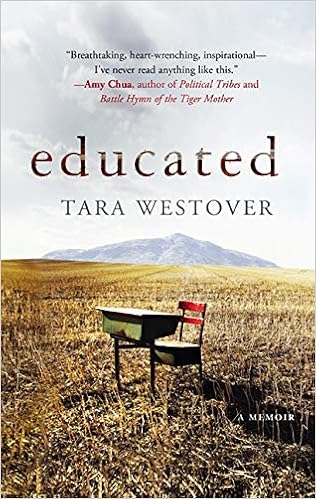
April 2018: Educated by Tara Westover

 Meeting Details: 
meeting at Tessa's house on either Thursday, April 4th at 7:30.  Discussion to begin at 8 pm.

Discussion Questions:

  1. Did you enjoy the book?  Why or why not?  How does it compare to other memoirs you've read?
  2. Tara Westover’s memoir recounts her life as the daughter of Mormon survivalist parents who leaves rural Idaho to pursue an education. What do you think she’s referring to with the title Educated? And what statement do you think the book makes on education at large?
  3. Westover’s quest for an education is a dramatic rebellion by her father’s standards. How does her rebellion differ from that of her older brother Tyler, if at all?
  4. Do you think being the youngest child in the family impacted Westover ultimately leaving her family? Would it have made a difference if she’d been the oldest child?
  5. Why is it significant that Westover didn’t know the word “holocaust” and had no knowledge of race issues in the United States?
  6. Which family member had the biggest influence on Westover’s quest for a different life? Which non-family members were influential on her life?
  7. Westover’s life changes dramatically thanks to an encouraging professor at Brigham Young University. How might her life be different if she hadn’t applied for the study abroad program at Cambridge University?
  8. Westover eventually finds her voice and realizes it’s just as powerful as the people who have influenced her life. What is voice, and how important is it that every child be encouraged to find their own?
  9. What impact does Westover’s pursuit of formal education have on her parents and family?
  10. How does education change Westover’s view of her childhood? How does she come to terms with how she was raised once she knows the value of education?
  11. Westover makes great efforts to ensure the story is as objective as possible, including footnotes where accounts of an event differ, or comparing her diary entries to her memory. As a reader, how important is objectivity in this story, and more largely, in memoirs in general?
  12. At 30, Westover is still relatively close in age to the events that occur in this book. How do you think the memoir would be different were it written when Tara was significantly older and more distanced from this time in her life? In what ways would it alter your interpretation of these experiences?
  13. Would you recommend this book?  To whom?  Why or why not?
(most questions from Bookbub.com)

Menu Ideas: Breakfast at the Westovers

One of Tara's opening images is the debate over family breakfast (pg 3-5) in which "breakfast became a test of loyalty," a theme that dominates the book.  Let's cook up a little breakfast goodness focusing on some of those hotly contested foods: butter, honey, dairy, corn flakes, cream of wheat (or even slippery canned peaches -an important survivalist food!)

Reminder: please weigh in on book choices for the upcoming months so that we can finalize that list!

Thursday, February 28, 2019

March 2019: Breath, Eyes, Memory by Edwidge Danticat


Image result for breath eyes memory
March Book Club - Library book kit: Breath, Eyes, Memory
Host: Sherrie
Date: Thursday March 7th, 7:30 pm


Discussion Questions:
1.      Did you enjoy the book?  Why or why not?

2.  Edwidge Danticat has said that in Haiti, "Everything is a story. Everything is a metaphor or a proverb." How does the character of grandmother personify this tendency? How do some of the proverbs and tales she tells Sophie relate to the events and themes of the novel?

3. As a young girl, Martine's favorite color was daffodil yellow; in middle age she is obsessed with the color red. What significance and associations do these colors have for her? In what way does the change from yellow to red symbolize the change in Martine's own character? Does Danticat use color symbolically elsewhere in the story?

4. Martine once hoped to be a doctor; later, she transfers her ambitions to Sophie. "If you make something of yourself in life, " she says to her daughter, "we will all succeed. You can raise our heads" (p. 44). Why does Sophie consciously reject her mother's ideal of high achievement? Why does she choose to become a secretary rather than, for instance, a doctor?

5. The character of Atie is perhaps the most complex and mysterious in the novel. Why is Atie so changed when Sophie returns to Haiti? Why does she so resolutely stick to her idea of staying with her mother and doing her "duty, " even though IfĂ©; says, "Atie, she should go. She cannot stay out of duty. The things one does, one should do out of love" (p. 119)?

6. Atie says to Sophie, "Your mother and I, when we were children we had no control over anything. Not even this body" (p. 20). How does this knowledge help Sophie shape her life? In what ways does Sophie take control of her own life as her mother and aunt never were able to?

7. In the graveyard, Atie reminds Sophie to walk straight, since she is in the presence of family. Grandmother Ifé plans carefully for her death, which she thinks of as a "journey" (p. 195). How does Sophie's grandmother's attitude toward death and the dead, as illustrated in this novel, compare with American ones? How does each culture attempt to foster a sense of wholeness, of continuity, between the generations?

8. Sophie feels that Haitians in America have a bad image as "boat people." Are her efforts to assimilate, to become "American, " in any way related to her physical self-loathing ("I hate my body. I am ashamed to show it to anybody, including my husband" [p. 123])? How does her bulimia express such self-loathing?

9. Breath, Eyes, Memory is primarily a story of the relationships between women: mothers, daughters, grandmothers, sisters. But there are two significant male characters in the novel, Joseph and Marc. Does Danticat depict Joseph and Marc as full, rounded-out characters, or do we see them only through Sophie's slanted point of view? How does Sophie express her ambivalent feelings about both of them? Why is she so angry with Marc after her mother's death? Do you feel that her anger is justified? Is it possible that Sophie's aloofness from both these men stems from her upbringing in an almost exclusively female world, where "men were as mysterious to me as white people" (p. 67)?

10. Martine's rape by an unknown man, possibly a Macoute, is the defining event in her life, bringing with it overpowering feelings of fear and self-loathing which she passes on to her daughter. Sophie's therapist even suggests that Martine undergo an exorcism. How does Sophie in her own way succeed in "exorcising" the evil events of the past? "It was up to me to avoid my turn in the fire" (p. 203), she says; how does she achieve this?

12. When Sophie breaks her maidenhead with the pestle, she likens it to "breaking manacles, an act of freedom" (p. 130). What exactly does "freedom" mean to Sophie? Which of her other actions represent bids for freedom and autonomy? What does she accomplish when, at the end of the novel, she beats the stalks of sugar cane? Do you feel that Martine in some manner "liberated" herself by committing suicide? Or was her act one of submission?

13. Would you recommend this book?  Why or why not?
Menu:
Starter: Haitian patties
Main: Haitian chicken in sauce
Side: Baked plantains
Yellow rice
Dessert: Rice pudding


Saturday, February 2, 2019

February 2019: Your Heart is the Size of Your Fist by Martina Scholtens


Your Heart Is the Size of Your Fist: A Doctor Reflects on Ten Years at a Refugee Clinic

Your Heart is the Size as Your Fist
Feby Martina Scholtens

The annual Couple's Book Club!!
Saturday, Feb 9. 20197:30pmAt Karen's house

1. Did you enjoy this book? Why or why not? 2. The opening chapters describe Scholtens’ “drift” into refugee medicine. She describes growing up in a community where she was “expected” to be a teacher or a homemaker. Do you think this a fair assessment, or more her interpretation?
3.She describes her first clinic as where the “worried well” came, the “anxious professionals” and it didn’t sit well with her. Who do you imagine this to be? Is it us? Do you think this a fair statement of people visiting a doctor clinic, or is it more a reflection after 10 years of working with the poorest, lowest element of society? 4. Scholtens advocates not cultural knowledge, but cultural humility - recognizing that we cannot fully understand another culture without having lived it, but that people are willing to forgive ignorance if there is humble curiosity. She also advocates not focusing on differences, but what makes us common, human and alive.Do you agree? Does this work also with popular culture rather than racial culture?
5. In the chapter dealing with the struggle/conflict of reconciling a career with motherhood, were you able to identify with this if you are a working Mom. If you are a stay-at-home Mom, were you able to identify? She lists several things as key in making the dual life work...are they specific to working moms or more universal in nature? (pg 43ff) 6. In chapter 8, we hear how Scholten hears Yusef’s horrific story, and how she deals with stories of suffering from her patients. She describes various stages of dealing with this part of her job...voyeuristic fascination; avoidance; shame; detachment and ending with bearing witness - just listening. When we hear of others struggles, do we show some/any of these responses? 7. Scholtens attributes people asking about stories she's heard to a desire for titillation and is enraged. (pg 58) Do you think this is accurate/fair (especially considering her admittance of having been voyeuristically fascinated herself) or is this a result of sensitivity to the years of horrors she's heard? 8. In chapter 14, she describes her gardening habits, and those of her patients. She describes feeling somewhat guilty at first, as if these are not really worthy of her time, but comes to see them as mental health medicine. Similarly, she later reduces her patient load to preserve her mental health. Do you consider this in your own life? Do you have something that provides you with mental break/mental health? 9. Why do you think Scholtens chose to tell her story parallel to the story of the Hadad’s? Do you think this is the story of one family, or are they an amalgamation - a family created in her mind to highlight the refugee story? 10. She is very reflective in her career and life, so much that she almost pursued a career in liberal arts. Do you think she’s right when she says on page 14/15 that “the truest answers lie in the arts”? Do you think this reflective nature hindered or helped her in her medical career? When dealing with refugees in particular? In her life as a wife and mother? 11. Reading about things that refugees are moved by, or that they struggle with, highlighted many things that we take for granted growing up in Canada. (Healthcare, education, freedom to disagree with authority, the ability to “blend in”, peace...etc.) Was there something in this book that moved you to realize how blessed we are here? 12. In the last chapter, Scholtens reflects that “the magic always seemed to be where two things brushed against each other...beach, conversation, and dusk. In the exam room, too, the patient and I were two eternal spheres that rubbed up against each other, making a little spark to see by. Most was left unknown. It was that thin line where we met that was beautiful.” What does this mean to you? 13. The bio at the back of the book recognizes an award that Scholtens received for “History and Narrative in Family Medicine” and also cites her ongoing interest in narrative medicine. A google search will give you a form of definition like: “The care of the sick unfolds in stories. The effective practice of healthcare requires the ability to recognize, absorb, interpret, and act on the stories and plights of others. Medicine practiced with narrative competence is a model for humane and effective medical practice.” (attributed to Rita Charon and Columbia University) How does this differ from “regular” medicine, and how do you see it reflected in this book? 14. Often, this book seems to show two contrasts in its’ chapters. Poverty and wealth, peace and war, inhumanity and decency, joy at birth and missing an old life etc…at the end of the book, were you left feeling unsettled or hopeful, or something else? 15. Did this book change the way you felt our thought about refugees or the refugee situation in Canada? 16. To whom would you recommend this book?
Menu: the Multicultural Plate We are introduced to so many people and cultures in the book! In honour of the refugee clinic and the multicultural country that we are, it would be fun to sample from several places. So, rather than a specific menu, let’s everyone pick a different country and bring a dish from there! Here is a list of countries represented by refugees that Scholtens encounters... Iraq, Iran, Pakistan, Somalia, Syria, Myanmar, Kenya, Afghanistan, Congo, Ethiopia, Vietnamese, Nepal, Burundi, Bhutan, Colombian, China, Eritrea There are tons of websites online that you can search for recipes, but if you are stuck, here is a website from a lady who is cooking entire meals from as many countries as she can. (And she includes background for each country…) https://www.internationalcuisine.com/journey-by-country/ Pick a country and a dish, and sign up below. If you know the dish you are bringing, add the name or description so that we don’t all bring chicken stew (or something!) Appetizers: 1 or 2 people
Nepal - red lentil soup (Karen)
Afghanistan - meatball appetizer (Tessa) Entrees: 2 or 3 people
Pakistan - chicken curry with rice (Karen) Dessert: 1 or 2 people Colombia (Tamara)
Vietnam - fruit and rice pudding (Tessa) Drinks: Tamara

Saturday, September 29, 2018

Sept 2018: Hollow City by Ransom Riggs

Hollow CityBook: Hollow City (#2 Miss Peregrines)
Place: Emily's house
Date: Oct 4
Time: 7:30pm, discussion starts @8


Menu:
Meat pies (Olive' favorite)
A favorite dish with honey, inspired by Hugh
Gypsy stew
Gypsy bread https://www.thedailymeal.com/rosemary-dill-and-bacon-manriklo-pan-fried-bread-recipe
Jacket potatoes (ch 8) https://www.bbcgoodfood.com/recipes/1656645/classic-jacket-potatoes
Stewed apples (from the Menagerie)
Nuts (from the carnival)


Discussion Questions:

  1. Did you like the book? Why/why not?
  2. Enoch tends to be the antagonist within the group. Do you think Enoch is pessimistic or realistic?Enoch repeatedly voices the worst-case scenario. Does doing so harm or hurt the group’s progress? Is it better to keep spirits high by sugarcoating the truth or to be completely honest about the situation and prepare to face it?
  3. Why do you think the hollows and wights chose to pose as Nazi soldiers? How does this element add to their malicious presence in the book?
  4. The children spend the entire book running away from hollows while trying to make their way to London. Did you think running was the best plan, or should they have tried to stand and fight, or simply hide?
  5. When the children had to leave the loop, Enoch packed reptile hearts, Hugh took the front doorknob, Horace took his “lucky pillow,” Fiona a jar of wormy garden dirt, and Millard had “striped his face with bomb-pulverized brick dust.” Jacob observed that “if what they kept and clung to seemed strange...it was all they had left of their home.” How did each of these items fit the character of each child? What would the others have taken? What would you have liked to keep from the house, or from your own home, if it were damaged? 
  6. The Gypsies live separately from the rest of society, much like the peculiar children. What other similarities do you notice between the Gypsies and the peculiars?
  7. The children’s stories of their past are mostly sad, especially Emma’s. How would you react if your friend or family member suddenly developed peculiar powers?
  8. What did you think about Jacob’s eventual decision to leave the peculiar children? What decision would you have made in his place?
  9. Hollow City ends with a spectacular cliffhanger. What do you think will happen in the next book? How will Jacob’s newly discovered powers affect the story? 
  10. Mr. White was appalled that the children called them monsters, and considered him and his kind more evolved than any other creatures on the planet. Why do evil creatures lie justify their actions to make themselves look better than they really are, especially to those who actually pursue good, like the children? How is he actually like many evil men throughout our world history, and what makes him blind to it? 
  11. Why was it so important for Emma “to prove to a stranger that we were good-hearted, when we knew ourselves to be”? Why did “the suggestion that...our natures were more complexly shaded, seemed to bother her”? Was it that way for all of the peculiars, or only some? And do normal people struggle with that as well? Why? 
  12. Would you recommend this book to others? If so, who?

Wednesday, May 16, 2018

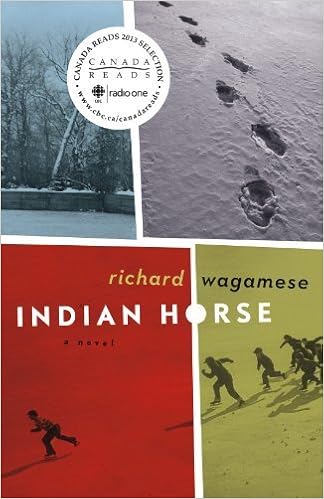
June 2018: Indian Horse by Richard Wagamese

Meeting Details: We'll be meeting on 
Thursday, June 28th at Tessa's house.

Discussion Questions:

1) Did you enjoy the book?  Why or why not?

2) The story is told as a first person narrative. How do you react to Saul? Do your attitudes to him change during the novel, and if so, what brings about these changes?

3) To which character(s) in the novel, other than Saul, do you react most strongly? Reflect on your reactions and the possible reasons for them

4) The novel vividly describes the effects on Saul when he is sent to a residential school: “I read once that there are holes in the universe that swallow all light, all bodies. St. Jerome’s took all the light from my world”(43)   How did reading the novel change your understanding of the residential school system and its lasting effects?

5) “One who loves does not brandish fear or require it” (26) What insights into Aboriginal spirituality do you gain from the novel? “Where is God now, then?” I asked (92)  Where do you find God in this story?

6) Richard Wagamese writes poetically about hockey, describing it as the “snow white stage”. What does hockey mean to Saul? Are all his hockey experiences positive? 

7) Racism is a very grim reality for Saul.  Give a few examples of racism in the book - how does Saul react to this racism?  While it is tempting to believe that these attitudes are no longer prevalent, examples can be found in many places. Reflect on examples of stereotyping or racism that you have experienced directly, have heard about from friends, or have witnessed in the media or other sources.

8) Richard Wagamese is an accomplished storyteller who has performed across the country. Was there one example of excellent story-telling in the book that you found particularly effective?

9) In reading Indian Horse, what did you learn about Indigenous peoples in Canada that you did not know before? 

10) “They scooped out our insides, Saul. We are not responsible for that. We are not responsible for what happened to us. None of us are,” Fred said. “But our healing – that’s up to us.” (210) What you do think "reconciliation" means?  How can we as individuals, Christians and as Canadians, be part of the healing?

11) What role does redemption play in Indian Horse?   The book begins with the idea of storytelling: “They say I can’t understand where I’m going if I don’t understand where I’ve been . . .”(2)   How does story-telling play a role in redemption?

12) Richard Wagamese has said that Indian Horse “…was a story clamoring to be told in a way that was empowering – that was not preachy, threatening or guilt inducing.” Do you feel Indian Horse is, in fact, a story told in a way that is empowering and not preachy, threatening or guilt inducing? Why or why not?

13) Would would recommend this book?  To whom and why or why not?

Many of the questions taken from www.amnestybookclub.ca 
(which also has some good background info about the book, if you're interested) and http://manitouconference.ca/img/Gillian-Indian-Horse.pdf 


Menu: Ma's First Rule is Food.

Martha Kelly believes in feeding growing boys well... the food's not fancy, but it's simple stick-to-your ribs fare made with what's locally available.  Her husband says about her: "Ma's first rule is food.  She cooks up a storm too."  And every serious hockey player knows that a meal should have as many parts as a hockey game!

For a smaller crowd, we may want to consider skipping the second period and going straight from First Period appetizers to Third Period desserts!

First Period:
Potato, Leek and Bacon Soup
Bannock

Second Period:
Fried fish
Fried onions and potatoes
Baked beans (canned is fine!)
Fresh bread
Pickles

Third Period:
Blueberry Cobbler
Ice Cream

Overtime: 
Chocolate Brownies
Coffee/tea

Reminder: Please take a few minutes to check out our book choices for Sept-December (posted below) so that we can choose books at the June meeting.